What Does Your Workplace Really Need?
When someone gets hurt at work, the last thing you want to hear is:
“Where’s the first aid kit?”
Followed closely by:
“I think we’re out of bandages.”
First aid and emergency supplies are some of the easiest safety equipment to overlook because they tend to sit quietly in a cabinet, wall station, vehicle, or emergency response bag until somebody actually needs them.
Then suddenly, everybody cares.
The good news is that getting prepared does not have to be complicated.
The first step is understanding what your workplace actually needs.
There Is No One-Size-Fits-All First Aid Kit
OSHA requires adequate first aid supplies to be readily available in workplaces covered by 29 CFR 1910.151 when the circumstances of the standard apply.
But OSHA does not say that every workplace must have the exact same first aid kit.
In fact, OSHA’s guidance specifically recognizes that larger workplaces, multiple operations, and workplaces with unique or changing hazards may need additional kits, different types of equipment, or larger quantities of supplies.
That makes sense.
An office with 20 employees does not have the same first aid needs as a construction crew working around power tools, heavy equipment, elevated work areas, and changing jobsites.
Your first aid supplies should reflect the work being performed.
Start With Your Workplace Hazards
Before buying another first aid kit, take a look around.
What could realistically happen here?
Consider:
- Cuts and punctures
- Burns
- Eye injuries
- Sprains and strains
- Falls
- Crushing injuries
- Chemical exposure
- Serious bleeding
- Heat-related illness
- Electrical hazards
- Vehicle or equipment incidents
- Weather-related emergencies
- Remote or isolated work
- Blood or other potentially infectious material exposure
Your incident history can also tell you something.
If the same type of injury keeps showing up in your workplace, your first aid supplies should reflect that reality.
OSHA recommends periodically assessing the specific needs of the worksite and adjusting first aid supplies as necessary. Employers can use injury and incident records to help identify unique or changing first aid needs.
In other words, don’t just buy what you’ve always bought. Look at what your employees actually encounter.
What Belongs in a Basic First Aid Kit?
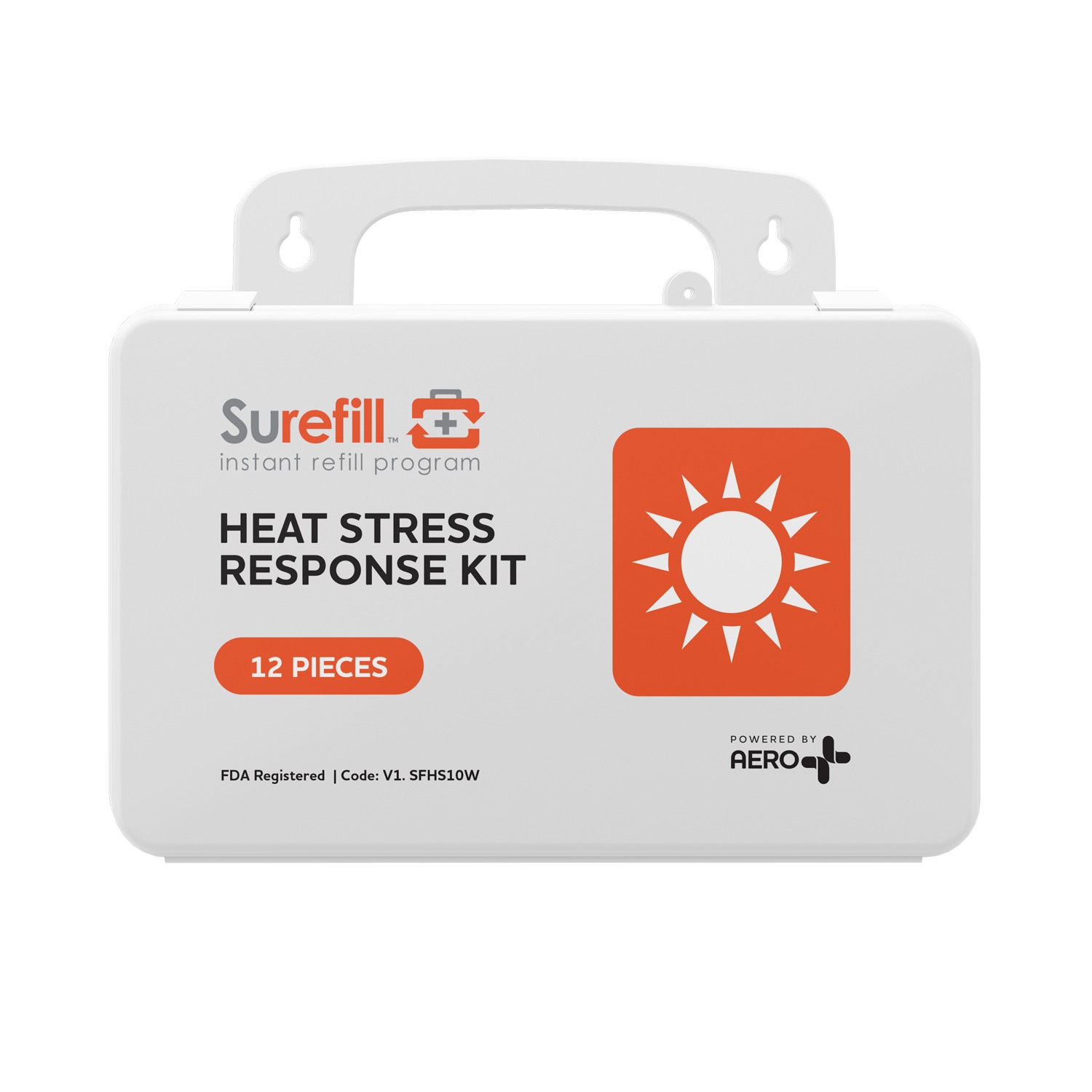
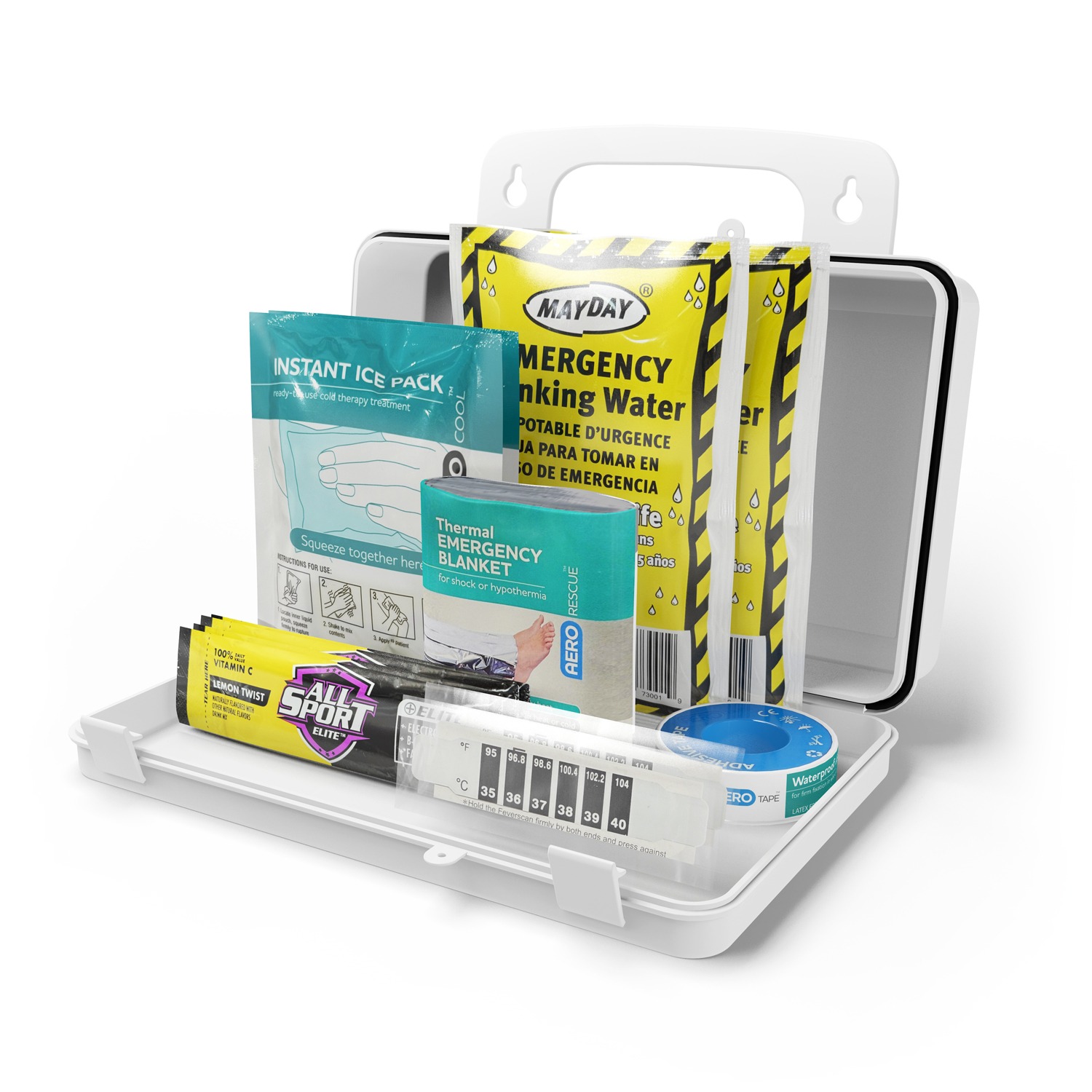
A basic workplace first aid kit may include supplies such as:
- Adhesive bandages
- Gauze pads
- Wound dressings
- Medical tape
- Antiseptic wipes
- Disposable gloves
- Scissors
- Tweezers
- Cold packs
- Burn treatment supplies
- Eye pads
- Emergency blankets
- CPR barriers
The exact contents and quantities should be appropriate for the workplace.
And remember, a first aid kit is only useful if it is accessible and stocked.
A beautifully organized kit with three bandages left in it is not exactly a preparedness strategy.
Think Beyond the Basic Kit
Some workplaces need more than traditional first aid supplies.
Depending on the hazards, you may need additional emergency equipment such as:
Bleeding Control Supplies
For higher-risk workplaces, dedicated bleeding-control supplies may be appropriate.
These may include:
- Tourniquets
- Hemostatic dressings
- Pressure dressings
- Trauma dressings
- Trauma shears
- Disposable gloves
- Other bleeding-control equipment
OSHA has addressed bleeding-control supplies in its first aid guidance and recognizes that workplace first aid needs vary based on anticipated hazards.
For workplaces where serious injuries are reasonably foreseeable, it may make sense to have dedicated bleeding-control supplies that employees can quickly identify and access.
Training matters, too.
Emergency equipment should support an overall response plan rather than simply being purchased and placed on a shelf.
AEDs: Having One Is Only Part of the Plan
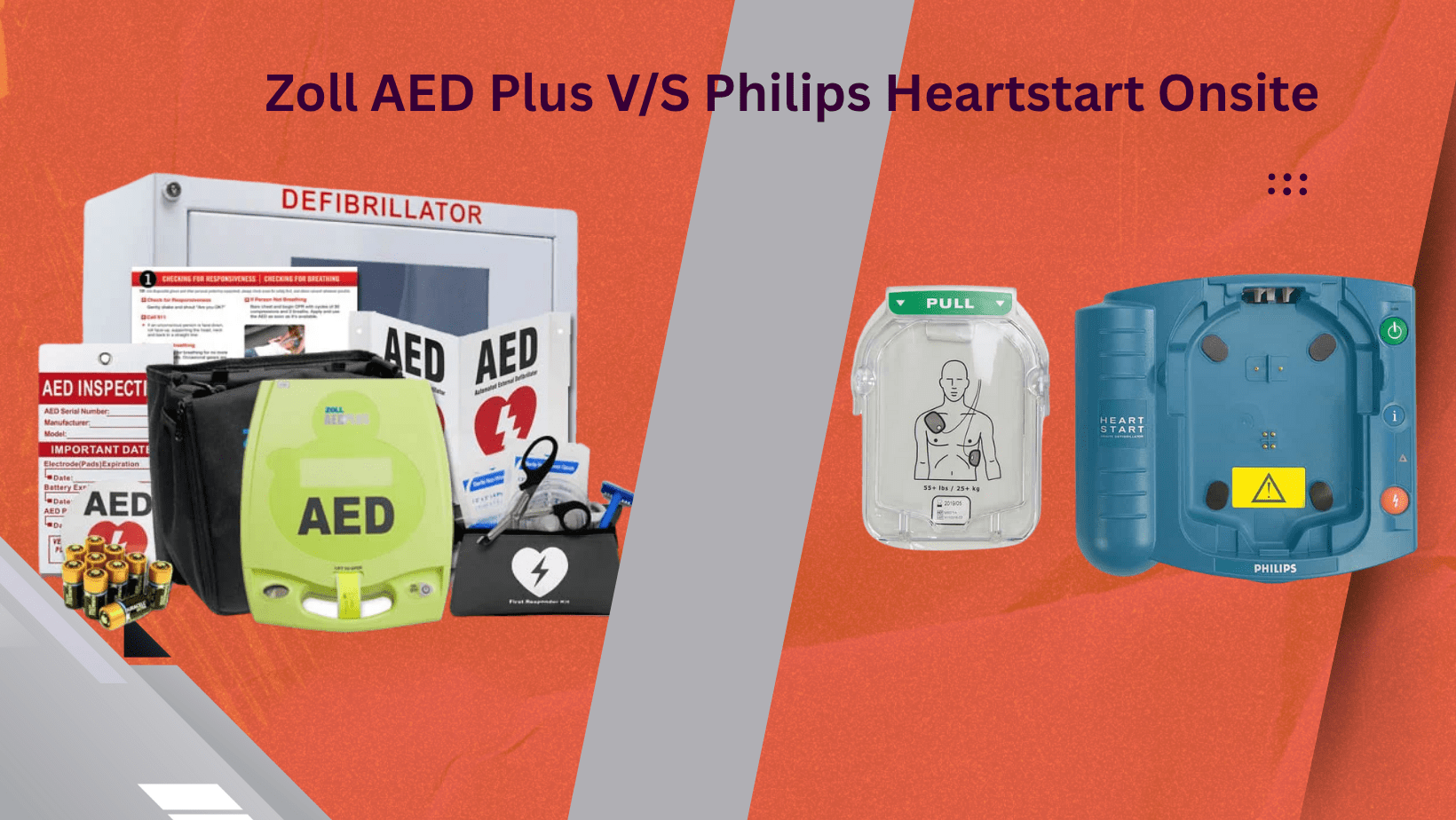
Automated external defibrillators, or AEDs, can be an important part of an emergency response program.
But purchasing an AED is not the finish line.
If your workplace has an AED, employees should know:
- Where it is located
- How to access it
- Who is trained to use it
- How emergency medical services will be contacted
- What other emergency equipment is nearby
- How the AED will be inspected and maintained
OSHA guidance for workplaces with AEDs recommends that employers designate who will use them and train those employees. OSHA also recommends locating AEDs so they can be accessed quickly and maintaining them according to the manufacturer’s specifications.
An AED that nobody can find is not much help.
Neither is one with a dead battery.
Don’t Forget Eye and Body Flushing
If employees may be exposed to injurious corrosive materials, OSHA’s general industry standard requires suitable facilities for quick drenching or flushing of the eyes and body to be available within the work area for immediate emergency use.
That means a small bottle of eyewash sitting in a first aid cabinet may not be an appropriate substitute for the emergency equipment required by the hazard.
Depending on your workplace, you may need:
- Plumbed emergency eyewash
- Self-contained eyewash stations
- Emergency showers
- Portable flushing equipment
- Supplemental eyewash bottles
The right equipment depends on the specific hazard and applicable requirements.
The important part is to identify the hazard before the exposure happens.
PPE Belongs in the Conversation, Too
First aid responders may need appropriate PPE when providing care.
OSHA’s first aid kit guidance notes that when employees could reasonably be exposed to blood or other potentially infectious materials while using first aid supplies, appropriate PPE is required under the Bloodborne Pathogens standard.
That can include items such as:
- Disposable gloves
- Eye protection
- Face shields
- Masks
- Protective gowns or other protective clothing, depending on the situation
This is an easy detail to overlook.
You don’t want your first aid responder helping an injured employee while unnecessarily exposing themselves to another hazard.
Construction Sites Have Different Needs
Construction is a good example of why first aid supplies cannot simply be treated as a one-time purchase.
The jobsite changes.
The crew changes.
The hazards change.
The location changes.
OSHA’s construction standard, 29 CFR 1926.50, requires first aid supplies to be easily accessible when required. Construction first aid kits must be kept in weatherproof containers with individually sealed packages for each type of item, and employers must check them before sending them out on each job and at least weekly on each job to make sure used supplies are replaced.
That’s a pretty good reminder that “we have a first aid kit” is not the same as “we are prepared.”
Construction employers should also consider:
- Number of workers
- Number of jobsites
- Distance from medical facilities
- Remote work locations
- Vehicle and equipment hazards
- Fall hazards
- Trenching and excavation
- Electrical work
- Hot work
- Chemical exposure
- Severe weather
- Emergency communication
- Access for emergency responders
A kit sitting in the main office may not help much when the crew is working 500 yards away.
First Aid Supplies Should Be Easy to Find
OSHA uses the phrase “readily available” in its general industry first aid standard.
That matters.
Your employees should not have to start a scavenger hunt when someone is injured.
Think about:
- Is the kit clearly marked?
- Is it easy to access?
- Do employees know where it is?
- Is it located near the areas where injuries are most likely?
- Are additional kits needed?
- Can employees access it during all work shifts?
- Is emergency equipment available where the work actually happens?
OSHA has noted that the location and number of first aid kits should be based on the particular needs of the workplace.
For a larger facility, that may mean multiple kits or stations.
For mobile crews, it may mean kits in vehicles or portable emergency response bags.
Emergency Response Bags Can Make Sense
Sometimes the best solution is not a wall-mounted first aid cabinet.
For mobile crews, construction sites, utilities, industrial operations, and other environments where employees move around, a portable emergency response bag may make more sense.
A modular system can also make supplies easier to organize.
For example, the Aero Healthcare Modulator Emergency Response Bag uses separate modules to organize emergency supplies by type of response need. Depending on the configuration, systems in the Modulator line can include supplies for general first aid, burns, eye injuries, bleeding control, trauma, and other emergency response needs.
That type of system can be especially useful when a workplace needs something more comprehensive than a traditional first aid kit but still needs the equipment to be organized and portable.
The goal is not to have the biggest emergency bag in the building.
The goal is to have the equipment your workplace actually needs, where people can get to it.
Don’t Forget Spill Response
First aid supplies address injuries.
They don’t necessarily address the hazard that caused the emergency.
If your workplace handles chemicals, oils, fuels, or other liquids, spill response supplies may also be necessary.
Depending on the materials present, that could include:
- Absorbent pads
- Absorbent socks
- Spill pillows
- Disposal bags
- Protective gloves
- Protective eyewear
- Chemical-specific absorbents
- Warning signs
- Spill kits designed for specific materials
A spill kit should be selected based on the material being handled.
Oil, chemical, and universal spill kits are not automatically interchangeable.
Your emergency plan should also identify who responds to a spill, when employees should evacuate, and when the situation requires outside emergency assistance.
Emergency Supplies Go Beyond First Aid
Depending on the workplace, emergency supplies may also include:
Emergency Lighting
- Flashlights
- Headlamps
- Spare batteries
- Portable lighting
Communication
- Emergency contact lists
- Battery-powered radios
- Backup communication equipment
- Portable chargers
Severe Weather
- Emergency weather radios
- Flashlights
- Batteries
- Water
- Basic emergency supplies
- Shelter supplies
Fire Response
- Fire extinguishers
- Fire alarm systems
- Emergency evacuation equipment
- Other fire protection equipment appropriate to the workplace
Employees should also know what equipment they are expected to use and what situations require immediate evacuation rather than an attempt to respond.
Keep Supplies Stocked and Ready
This may be the least exciting part of the conversation.
It may also be the most important.
First aid and emergency supplies need to be inspected and maintained.
Check for:
- Expired products
- Used supplies
- Damaged packaging
- Missing equipment
- Dead batteries
- Empty dispensers
- Damaged eyewash equipment
- AED battery or pad status
- Outdated emergency contact information
For construction operations, OSHA specifically requires first aid kits to be checked before being sent out on each job and at least weekly on each job so used items can be replaced.
For other workplaces, establish an inspection schedule that makes sense for your operation.
And then actually follow it.
One Kit May Not Be Enough
One of the most common mistakes is assuming one first aid kit automatically covers the entire workplace.
Consider the size and layout of your facility.
If employees are spread across multiple buildings, floors, production areas, warehouses, outdoor work areas, or jobsites, you may need more than one location for first aid and emergency supplies.
Think about response time.
If someone gets injured, how long would it take to reach the nearest kit?
If the answer is “a few minutes, if someone knows where the key is,” it’s probably worth reconsidering the setup.
First Aid Supplies Should Support Your Emergency Plan
Your first aid and emergency supplies should be connected to your Emergency Action Plan.
Your plan should answer questions such as:
- Who calls 911?
- Who provides first aid?
- Where are the first aid supplies?
- Where is the AED?
- Where are spill kits located?
- Where are eyewash stations located?
- Who is responsible for emergency equipment?
- Where do employees evacuate?
- Where do they shelter?
- How are employees accounted for?
- How are visitors and contractors accounted for?
- How will emergency responders access the facility or jobsite?
If your employees don’t know the answers, adding another box of bandages probably isn’t going to solve the problem.
First Aid and Emergency Supply Checklist
Use this as a quick reality check for your workplace:
- Do we have adequate first aid supplies?
- Are they readily accessible?
- Do employees know where they are?
- Are supplies appropriate for our workplace hazards?
- Do we have enough kits for the size and layout of our workplace?
- Do mobile crews have access to portable supplies?
- Do we have bleeding-control supplies where appropriate?
- Do we have appropriate eyewash or emergency flushing equipment where required?
- Do we have an AED if our emergency plan includes one?
- Are emergency supplies inspected regularly?
- Are expired and used supplies replaced?
- Are batteries and other equipment checked?
- Do first aid responders have appropriate PPE?
- Are spill response supplies available where needed?
- Does our emergency equipment support our Emergency Action Plan?
- Do employees know what to do when an emergency occurs?
The Bottom Line
First aid and emergency supplies are not about filling a cabinet with as much stuff as possible.
They are about being prepared for the hazards your employees actually face.
A small office may need a relatively simple first aid setup.
A construction company may need multiple jobsite kits, bleeding-control supplies, eyewash, emergency response bags, and other specialized equipment.
A manufacturing facility may need first aid stations, AEDs, eyewash and emergency showers, spill response supplies, and equipment specific to its processes.
The right answer depends on the workplace.
Assess the hazards. Stock the right supplies. Make them accessible. Train your people. Check the equipment. Then check it again.
Because “we have a first aid kit somewhere” isn’t really a preparedness plan.
Need Help Choosing First Aid and Emergency Supplies?
Southern Safety Supply carries a wide range of first aid, emergency response, bleeding-control, AED, eyewash, spill response, and workplace safety supplies.
If you’re not sure what your workplace needs, we can help you look at the hazards, work environment, and response needs and build a practical setup around them.
And once you have the supplies, keeping them stocked matters just as much as buying them.
That’s one of the ideas behind our NEVER OUT™ Inventory Management service. Regular inventory checks help keep essential safety supplies available, organized, and ready when your team needs them.
Keep Building Your Emergency Preparedness Plan
Keep Building Your Emergency Preparedness Plan
This article is part of our National Preparedness Month workplace safety series.
Continue exploring the series:
- National Preparedness Month: Your central resource for workplace emergency preparedness.
- 10 Workplace Emergency Preparedness Mistakes That Could Leave Your Team Unprepared.
- What Does OSHA Require for an Emergency Action Plan?
- Workplace Emergency Kits: What Should You Actually Have on Hand?
- First Aid and Emergency Supplies: What Does Your Workplace Really Need?
- Emergency Preparedness for Construction Sites: What Changes When the Jobsite Changes?
- Evacuation vs. Shelter-in-Place: Does Your Workplace Know the Difference?
- Emergency Drills: How to Test Your Plan Before You Need It.
- Severe Weather Emergency Preparedness: Is Your Workplace Ready?
- Spill Happens: Workplace Spill Response and Preparedness.
And don’t forget to download our Workplace Emergency Preparedness Checklist to help identify gaps in your current
Important Note
This article is provided for general educational purposes and is not legal or safety consulting advice. Emergency drills should be planned for the specific hazards and conditions of your workplace. Do not conduct exercises that create unnecessary risk or interfere with actual emergency response. Follow applicable OSHA requirements and coordinate with appropriate safety personnel and emergency responders when necessary.o help identify gaps in your current emergency plan.