

Posted on

What Does OSHA Require for an Emergency Action Plan?

If an emergency happened at your workplace or jobsite today, would your employees know what to do?

That is the basic purpose of an Emergency Action Plan (EAP).

An EAP establishes procedures for employees and employers to follow during workplace emergencies. OSHA says a well-developed plan should be based on the hazards at the worksite, its layout, structural features, emergency systems, and the types of emergencies workers could encounter.

But here’s where things can get confusing:

Does OSHA require every employer to have a written Emergency Action Plan?

Not necessarily under the same requirement.

OSHA’s 29 CFR 1910.38 says an employer must have an EAP when an OSHA standard in that part requires one. OSHA’s construction standard, 29 CFR 1926.35, similarly applies to emergency action plans required by a particular OSHA standard. Other OSHA standards can trigger EAP requirements as well.

So let’s break down what employers need to know.


What Is an Emergency Action Plan?

An Emergency Action Plan is a workplace plan that describes the actions employers and employees should take to protect themselves during an emergency.

Depending on the workplace, emergencies may include:

  • Fire
  • Severe weather
  • Chemical releases
  • Explosions
  • Flooding
  • Utility failures
  • Equipment incidents
  • Workplace injuries
  • Structural emergencies
  • Other events that could threaten employees

OSHA recommends starting with a hazard assessment to identify physical and chemical hazards that could cause an emergency. The plan should then describe how workers will respond to the emergencies relevant to that particular workplace.

A generic plan downloaded from the internet isn’t necessarily a good plan for your workplace.

Your plan should reflect your actual operation.


Does OSHA Require Every Business to Have an EAP?

The short answer: No—not under 29 CFR 1910.38 alone.

This is one of the most common points of confusion.

Under 29 CFR 1910.38(a), an employer must have an Emergency Action Plan whenever an OSHA standard in Part 1910 requires one.

OSHA identifies several standards that can require compliance with 1910.38, including standards addressing areas such as:

  • Process Safety Management
  • Hazardous materials and emergency response
  • Fire protection
  • Grain handling
  • Certain chemical exposures
  • Other specific workplace hazards

OSHA’s EAP guidance also provides an expert system employers can use to help determine whether their circumstances trigger the requirement.

For construction, 29 CFR 1926.35 applies to emergency action plans required by a particular OSHA standard and establishes minimum elements for those plans.

The important takeaway:

Don’t interpret “OSHA doesn’t require every employer to have an EAP under 1910.38” as “we don’t need an emergency plan.”

OSHA recommends emergency planning as a fundamental part of preparing for workplace emergencies, regardless of whether a particular standard triggers the written EAP requirement.


What Must an OSHA Emergency Action Plan Include?

When an EAP is required under 29 CFR 1910.38, OSHA specifies six minimum elements.

1. Procedures for Reporting a Fire or Other Emergency

Employees need to know how to report an emergency.

That could include:

  • Calling 911
  • Calling an internal emergency number
  • Activating a fire alarm
  • Contacting a supervisor
  • Using a radio or other designated communication system

The important thing is that employees understand the procedure before an emergency occurs.

Ask your team:

“If you discovered a fire or serious emergency right now, exactly how would you report it?”

If employees give five different answers, your plan may need some work.


2. Emergency Evacuation Procedures and Exit Routes

Your EAP must address emergency evacuation procedures, including the type of evacuation and exit-route assignments.

Employees should understand:

  • When evacuation is required
  • Who can order an evacuation
  • Which routes to use
  • Where to assemble
  • What alternate routes are available
  • What they should do if their normal route is blocked

OSHA’s guidance notes that evacuation procedures should be designed around the specific emergencies that could occur at the workplace.

Don’t forget changing jobsites.

A construction site may have different access points, routes, equipment, excavations, structures, and work areas from one month to the next.

A route that worked when the project began may not be the best route today.


3. Procedures for Employees Who Remain to Perform Critical Operations

Some workplaces have operations that cannot simply be abandoned immediately.

The EAP must address procedures for employees who remain to operate critical plant operations before evacuating.

Examples might include procedures for safely shutting down equipment or processes before evacuation.

This section should be specific to your operation.

It should also be clear who is trained and authorized to perform those tasks.

You don’t want an emergency to become more dangerous because several employees independently decide to “shut things down.”


4. Procedures for Accounting for Employees After Evacuation

Getting everyone outside is only half the job.

You also need to know:

Is everyone actually out?

OSHA requires procedures for accounting for employees after evacuation under 29 CFR 1910.38(c)(4).

Your accountability procedure may need to consider:

  • Different shifts
  • Multiple work areas
  • Contractors
  • Temporary workers
  • Visitors
  • Employees working away from the main facility
  • Large or changing construction sites

A simple headcount may work for a small office.

A large construction project may require something more sophisticated.

The method needs to fit the workplace.


5. Rescue and Medical Duties

If employees are assigned rescue or medical responsibilities as part of the emergency plan, those duties need to be addressed in the EAP.

This is also an area where employers need to be careful.

Don’t assign people emergency-response responsibilities simply because they happen to be nearby.

Employees performing designated rescue or medical duties need appropriate training and preparation for those responsibilities.

For hazardous-substance emergencies, additional OSHA requirements may apply depending on the employer’s role in the response.


6. Names or Job Titles of People Employees Can Contact

The plan must identify the name or job title of employees who can be contacted for additional information about the plan or an explanation of their duties.

This sounds simple.

But ask yourself:

Are those names and job titles still correct?

People change positions.

Employees leave.

Phone numbers change.

Responsibilities change.

An emergency plan should not depend on a person who left the company six months ago.

Keep your contact information current.


What About Employee Alarm Systems?

Under 29 CFR 1910.38(d), employers must have and maintain an employee alarm system when the standard applies. The alarm system must provide warning for necessary emergency action and comply with OSHA’s alarm requirements under 1910.165.

Employees need to understand what the alarm means and what action they are expected to take.

An alarm that nobody recognizes isn’t much of an emergency communication system.

Ask:

Does everyone know what our emergency alarm sounds like—and what they’re supposed to do when they hear it?


Does OSHA Require Emergency Action Plan Training?

Yes, when the EAP requirements apply, OSHA requires employers to designate and train a sufficient number of employees to assist in a safe and orderly evacuation.

The plan also needs to be reviewed with employees at specific times, including:

  • When the plan is developed
  • When an employee is initially assigned to a job
  • When the employee’s responsibilities under the plan change
  • When the plan itself changes

The construction requirements under 29 CFR 1926.35 similarly address reviewing the plan with employees and training designated employees who assist with evacuation.

Training shouldn’t mean simply handing someone a copy.

Employees should understand the parts of the plan that apply to them.


How Often Should an Emergency Action Plan Be Reviewed?

There isn’t one simple OSHA answer that says every workplace must review its entire EAP on a particular annual schedule under 1910.38.

However, OSHA’s requirements specifically call for review when the plan is developed, when employee responsibilities change, and when the plan changes.

And OSHA’s broader emergency-preparedness guidance recommends evaluating the plan and keeping it current as workplace conditions change.

Good times to review your plan include when:

  • You move or remodel a facility
  • Equipment changes
  • New chemicals or hazardous materials are introduced
  • Processes change
  • Emergency equipment changes
  • Employee responsibilities change
  • New hazards are identified
  • A construction site changes significantly
  • A drill identifies a problem
  • An actual emergency exposes a weakness

Don’t wait for the next emergency to discover that your plan is outdated.


What About Construction Sites?

Construction deserves special attention.

Under 29 CFR 1926.35, an emergency action plan required by an applicable OSHA standard must be in writing, subject to the exception provided in the standard, and must cover the designated actions employers and employees need to take to protect workers during fire and other emergencies.

The minimum elements include:

  • Emergency escape procedures and route assignments
  • Procedures for employees who remain to operate critical operations
  • Procedures for accounting for employees
  • Rescue and medical duties
  • Means of reporting fires and emergencies
  • Names or job titles of people who can provide additional information

OSHA also emphasizes that emergency planning needs to account for the specific worksite.

That matters on construction projects because the workplace isn’t static.

The jobsite you planned for in March may not be the jobsite you’re standing on in September.


What About Spill or Hazardous-Material Emergencies?

This is where emergency action planning can become more complicated.

A company that simply evacuates employees and relies on outside responders can have different HAZWOPER considerations than an employer whose employees are expected to respond to a hazardous-substance emergency.

OSHA’s HAZWOPER requirements address emergency response to hazardous-substance releases, and OSHA specifically notes that employers who evacuate employees and do not permit them to assist with the emergency may qualify for an exemption from certain emergency-response provisions if they meet the applicable conditions and provide an EAP meeting 1910.38 or 1926.35 requirements.

This is an area where “just grab the spill kit” is not an adequate emergency plan.

Your plan should identify:

  • What hazardous materials are present
  • Who is authorized to respond
  • What training is required
  • What PPE is appropriate
  • When employees should evacuate
  • Who contacts emergency responders
  • What spill-response equipment is available


OSHA Emergency Action Plan Checklist

Use this quick review to see whether your plan addresses the major requirements.

Reporting

☐ Employees know how to report a fire or other emergency.

Evacuation

☐ Emergency evacuation procedures are established.

☐ Exit routes and assignments are identified.

☐ Employees understand evacuation procedures.

Critical Operations

☐ Procedures address employees who may remain temporarily to perform critical operations.

☐ Only properly designated/trained employees perform those duties.

Accountability

☐ Procedures exist for accounting for employees after evacuation.

☐ Contractors and visitors are considered where applicable.

Rescue & Medical

☐ Rescue or medical duties are identified where applicable.

☐ Employees assigned those duties have appropriate training.

Contacts

☐ Names or job titles of responsible contacts are current.

Alarm

☐ Employees know how emergency alarms are communicated.

☐ The alarm system meets applicable OSHA requirements.

Training & Review

☐ Employees receive applicable emergency-plan training.

☐ Designated evacuation-assistance employees are trained.

☐ The plan is reviewed when responsibilities or procedures change.

Site-Specific Hazards

☐ The plan reflects the actual hazards and conditions of the workplace.

☐ Construction-site changes are incorporated when applicable.


What OSHA Requires vs. What Good Preparedness Looks Like

This distinction is worth remembering.

OSHA requirements

Depending on the applicable standard, OSHA may require specific EAP elements, written plans, alarm systems, training, employee review, evacuation procedures, accountability procedures, and other measures.

Good preparedness

A strong emergency preparedness program goes beyond checking boxes.

It considers:

  • Severe weather
  • Fire
  • Chemical releases
  • Power outages
  • Equipment failures
  • Structural problems
  • Medical emergencies
  • Spill response
  • Communication
  • Shelter-in-place
  • Contractors and visitors
  • Changing jobsites
  • Emergency equipment
  • Drills and exercises
  • Lessons learned after an emergency

OSHA recommends developing plans around the actual hazards and conditions of the worksite.

Compliance is the floor. Preparedness is what you build above it.


Are You Prepared—or Just Compliant?

That’s the question worth asking.

A binder on a shelf doesn’t evacuate a building.

A spill kit doesn’t train an employee.

An alarm doesn’t tell someone where to go.

And a plan nobody understands isn’t much of a plan.

The goal of an Emergency Action Plan is to help organize employer and employee actions during an emergency and reduce confusion when time matters.

Take a few minutes this month to ask your team:

“If something serious happened right now, what would you do?”

Their answers may tell you more about your preparedness than the document sitting in your safety office.


Need Help Getting Prepared?

Southern Safety Supply provides PPE, first aid, spill-response supplies, emergency equipment, visibility products, and other workplace safety supplies for businesses, contractors, manufacturers, municipalities, and other organizations.

We can help you identify products that fit the hazards and conditions of your operation—including:

  • First aid kits
  • Spill kits and absorbents
  • Safety eyewear
  • Gloves
  • Emergency eyewash
  • High-visibility apparel
  • Barricades and warning products
  • Emergency lighting
  • Jobsite safety equipment
  • Other PPE

And if maintaining critical PPE and safety supplies is a challenge, ask us about Never Out™ Inventory Management.

Being prepared isn’t just having the plan. It’s having the right equipment available when the plan has to be put into action.

Talk to a Safety Specialist

Keep Building Your Emergency Preparedness Plan

This article is part of our National Preparedness Month work place safety series.

Continue exploring the series:

And don’t forget to download our Workplace Emergency Preparedness Checklist to help identify gaps in your current

Important Note

This article is provided for general educational purposes and is not legal or safety consulting advice. Emergency drills should be planned for the specific hazards and conditions of your workplace. Do not conduct exercises that create unnecessary risk or interfere with actual emergency response. Follow applicable OSHA requirements and coordinate with appropriate safety personnel and emergency responders when necessary.


Sources & Further Reading

This article is provided for general educational purposes and is not a substitute for a site-specific hazard assessment, emergency action plan, training, or applicable federal, state, and local requirements.


Posted on

10 Workplace Emergency Preparedness Mistakes That Could Leave Your Team Unprepared

You have an emergency plan. Your employees have been told where to go. There’s a first aid kit somewhere in the building. You’ve got a spill kit on the jobsite. So you’re prepared…right?

Maybe.

The problem with emergency preparedness is that the gaps often don’t become obvious until something goes wrong.

A plan can look perfectly good on paper and still fail when employees don’t know who is responsible for what, an evacuation route has changed, a spill kit isn’t appropriate for the material released, or nobody remembers where the emergency contacts are.

OSHA recommends emergency action planning as a way to help employers and workers respond effectively when an emergency occurs. For employers subject to OSHA’s Emergency Action Plan requirements, the plan must address specific elements including reporting emergencies, evacuation procedures, accountability, rescue or medical duties, and responsible contacts.

Here are 10 common mistakes worth checking before you need your emergency plan.


1. Your Emergency Plan Exists—but Nobody Knows It Exists

One of the easiest mistakes to make is assuming that because an emergency plan exists, employees know what it says.

They may not.

Employees should understand the portions of the plan that apply to them, including how to report an emergency, where to evacuate or shelter, how accountability works, and what responsibilities they may have.

OSHA requires review of applicable emergency action plans with employees at specified points, including when the plan is developed, when responsibilities change, and when the plan changes.

Ask yourself:

If you stopped five employees at random today and asked, “What do you do if the alarm sounds?” would you get five reasonably consistent answers?

If not, there’s work to do.


2. The Plan Is Outdated

This is especially important for construction sites and other workplaces where conditions change.

A new piece of equipment is installed.

A wall is moved.

A chemical is introduced.

An excavation changes access to part of the site.

A new employee takes over an emergency responsibility.

A subcontractor joins the project.

Suddenly, the plan that was accurate six months ago may not accurately describe today’s workplace.

OSHA recommends reviewing and updating emergency plans when changes to layout, equipment, hazardous materials, processes, personnel responsibilities, or hazards affect emergency procedures.

If your workplace changes, your emergency plan should change with it.


3. You Have an Evacuation Route—but No Backup

What happens if the primary exit is blocked?

A fire, structural problem, equipment incident, severe weather event, or other emergency could make a normally usable route unavailable.

Your emergency planning should consider alternate routes and the different types of emergencies that could require evacuation or shelter.

OSHA notes that evacuation procedures should address the different types of emergencies that may occur and the appropriate response for each.

Ask:

“If our normal exit were blocked right now, where would everyone go?”

If the answer is silence, you found a gap.


4. Nobody Has a Reliable Way to Account for Employees

Getting everyone out of a building or away from a hazard is only part of the problem.

How do you know everyone is out?

Your plan should establish a method for accounting for workers after evacuation.

That becomes more complicated when you have:

  • Multiple shifts
  • Contractors
  • Temporary workers
  • Visitors
  • Employees working away from the main facility
  • Large construction sites
  • Multiple crews

OSHA identifies employee accountability after evacuation as a required element of EAPs covered by 29 CFR 1910.38 and 29 CFR 1926.35.

A headcount process that only works when everyone is standing at the front door isn’t much of a process.


5. You Forgot About Contractors and Visitors

Your employees may know the emergency procedures.

But what about the electrician who arrived this morning?

The delivery driver?

The subcontractor working on the other side of the site?

The customer visiting the facility?

The temporary worker who started yesterday?

Emergency planning should account for everyone who may be exposed to the emergency—not just the people who appear on the payroll.

This is especially important on construction sites and multi-employer worksites.

A good question to ask:

“If a visitor arrived five minutes before an emergency, how would we get them to safety?”


6. Your Emergency Equipment Is There—but You Can’t Find It

This one sounds ridiculous until you need something immediately.

Where’s the first aid kit?

Where’s the spill kit?

Where are the emergency lights?

Where are the fire extinguishers?

Where are the radios?

Where’s the eyewash?

Who knows?

OSHA’s emergency preparedness guidance recommends identifying common emergency equipment and assigning responsibility for inventorying and maintaining emergency equipment and supplies.

Emergency equipment should be:

Accessible.

Identifiable.

Appropriate for the hazard.

Maintained.

And, most importantly:

Known to the people who may need it.

Southern Safety Tip

Don’t just ask whether you have an emergency kit.

Ask:

“Could a new employee find it in under two minutes?”

If not, consider improving signage, location, training, or all three.


7. You Bought a Spill Kit—but Didn’t Consider What Could Actually Spill

A spill kit isn’t a universal solution.

The right response equipment depends on the material and the circumstances.

For example, a workplace dealing primarily with oils and fuels may have different spill-response needs than a facility handling corrosive or hazardous chemicals.

Before buying emergency spill supplies, identify:

  • What materials are present?
  • How much could potentially be released?
  • Where are those materials stored or used?
  • What PPE may be needed?
  • Who is trained and authorized to respond?
  • When should employees evacuate instead?
  • When should outside emergency responders be contacted?

Some hazardous-substance emergency response activities can trigger OSHA’s HAZWOPER requirements. Employers should not assume that every employee is authorized or trained to handle a hazardous-material emergency simply because a spill kit is available.

Related Southern Safety resource:

Spill Happens: What Should You Do During a Workplace Spill?

Need spill-response supplies?


8. You’ve Never Actually Practiced the Plan

This may be the biggest one.

A plan can look great in a meeting.

Then the alarm goes off.

Someone asks where everyone is supposed to go.

Someone else can’t hear the alarm.

The assembly area is blocked.

Nobody knows who is counting employees.

And suddenly everyone discovers the plan has some holes.

OSHA recommends practice drills as often as necessary to keep employees prepared and encourages employers to evaluate the strengths and weaknesses of the plan after each drill.

A drill doesn’t have to be elaborate.

Try a scenario such as:

“At 10:15 Tuesday morning, a forklift strikes a container and a spill occurs.”

Then ask:

  • Who reports it?
  • Who sounds the alarm?
  • Who stops nearby work?
  • Who evacuates?
  • Where does everyone go?
  • Who accounts for workers?
  • Who contacts emergency responders?
  • Who is authorized to address the spill?
  • What happens afterward?

You may learn more from a 15-minute exercise than from another hour spent reading the emergency plan.


9. You Prepared for the Emergency—but Not the Aftermath

The immediate danger isn’t necessarily the end of the problem.

After an emergency or drill, ask:

  • Did everyone get accounted for?
  • Did communication work?
  • Were emergency routes accessible?
  • Was the correct equipment available?
  • Were there delays?
  • Were employees confused about their responsibilities?
  • What supplies were used?
  • What needs to be replaced?
  • Does the plan need to be updated?

OSHA recommends evaluating drills, identifying strengths and weaknesses, and improving the plan based on what you learn.

Emergency preparedness should be a cycle:

Plan → Train → Practice → Evaluate → Improve

Then do it again.


10. You Don’t Know What You Don’t Know

This may be the hardest mistake to catch.

Every workplace has hazards that are easy to overlook because they’re part of the normal routine.

A forklift has always operated in that area.

The fuel tank has always been there.

The chemical has always been stored in that room.

The excavation has always been on that side of the site.

The same emergency equipment has been sitting in the same cabinet for years.

Familiar doesn’t mean safe.

Start your emergency preparedness review by walking the workplace with fresh eyes.

Look at:

Environmental risks

Severe weather, flooding, extreme temperatures and other natural hazards.

Operational risks

Equipment failures, vehicle incidents, utility strikes, power failures and machinery emergencies.

Chemical risks

Spills, leaks, releases, incompatible materials and exposure hazards.

Structural risks

Collapse, falling objects, excavation incidents, scaffolding problems and temporary structures.

Fire and life-safety risks

Fire, smoke, explosion, electrical emergencies and gas releases.

OSHA recommends conducting a hazard assessment that considers physical and chemical hazards inside or outside the workplace that could create an emergency, along with the site’s layout, structural features and emergency systems.


The 5-Minute Preparedness Test

Want to see where your plan stands?

Ask your team these five questions:

1. What is the most likely serious emergency we could face?

2. How would you know it was happening?

3. Where would you go?

4. Who is responsible for coordinating the response?

5. What equipment would you need—and where is it?

If your team can answer those questions quickly and consistently, you’re off to a good start.

If they can’t, don’t panic.

You’ve just identified what to work on next.


Ready to Find the Gaps?

Southern Safety Supply can help you identify practical safety and emergency-response equipment for your workplace or jobsite.

That may include:

  • First aid supplies
  • Spill kits and absorbents
  • Safety eyewear
  • Gloves
  • Emergency eyewash
  • High-visibility apparel
  • Barricades and warning products
  • Emergency lighting
  • Jobsite safety equipment
  • Other PPE appropriate to your hazards

And if keeping critical PPE and emergency supplies stocked is a challenge, ask us about Never Out™ Inventory Management.

The goal isn’t to sell you a bigger emergency cabinet.

It’s to help make sure that when something goes wrong, your people aren’t standing around asking, “Where’s the stuff we need?”


Keep Building Your Emergency Preparedness Plan

This article is part of our National Preparedness Month work place safety series.

Continue exploring the series:

And don’t forget to download our Workplace Emergency Preparedness Checklist to help identify gaps in your current

Important Note

This article is provided for general educational purposes and is not legal or safety consulting advice. Emergency drills should be planned for the specific hazards and conditions of your workplace. Do not conduct exercises that create unnecessary risk or interfere with actual emergency response. Follow applicable OSHA requirements and coordinate with appropriate safety personnel and emergency responders when necessary.


Sources & Further Reading

This article is provided for general educational purposes and is not a substitute for a site-specific hazard assessment, emergency action plan, training, or applicable federal, state, and local requirements.
Posted on

Trench Safety: Five Critical Steps That Save Lives on Every Jobsite

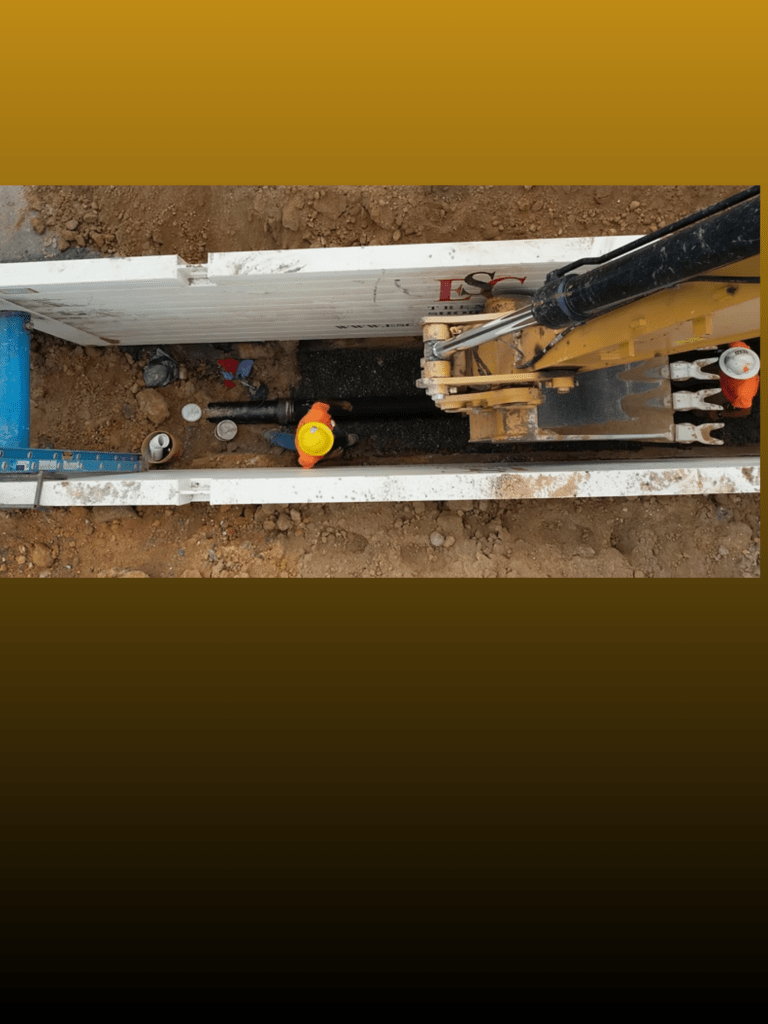
Construction crew working safely inside a protected trench using a trench box, ladder access, and proper PPE.

Every year, trench and excavation incidents change lives in an instant. A trench may appear stable one moment and collapse the next, leaving workers with little or no opportunity to escape. Soil is surprisingly heavy—just one cubic yard can weigh as much as a small pickup truck—making even a shallow collapse potentially fatal.

The good news is that most trench accidents are preventable. Proper planning, the right protective equipment, and following OSHA requirements dramatically reduce the risk of serious injury or death.

Why Trench Safety Matters

Trenching and excavation work is among the most hazardous activities in construction. Cave-ins remain one of the leading causes of fatalities because they happen quickly and often without warning. Beyond cave-ins, workers also face hazards such as:

  • Falling loads and equipment
  • Hazardous atmospheres
  • Water accumulation
  • Falls into excavations
  • Struck-by incidents from heavy machinery

Recognizing these hazards before work begins is the first step toward a safer jobsite.

Five Essential Trench Safety Practices

1. Always Have a Competent Person

OSHA requires a competent person to inspect trenches daily and whenever conditions change, such as after rainstorms, vibrations from nearby traffic, or other events that could affect soil stability.

A competent person has the knowledge and authority to identify hazards and stop work until conditions are safe.

2. Use the Proper Protective System

Any trench five feet deep or greater generally requires a protective system unless the excavation is made entirely in stable rock.

Common protective systems include:

  • Sloping
  • Benching
  • Trench boxes (shielding)
  • Shoring systems

The correct solution depends on soil classification, depth, and jobsite conditions.

3. Provide Safe Entry and Exit

Workers should never have to climb excessive distances to leave a trench.

Ladders, ramps, or other safe means of egress should be located so employees do not have to travel more than 25 feet laterally to exit the excavation.

4. Keep Materials Away from the Edge

Spoil piles, tools, and heavy equipment should remain at least two feet from the edge of the trench whenever possible. This helps reduce pressure on trench walls and minimizes the risk of material falling onto workers below.

5. Never Assume Yesterday’s Trench Is Safe Today

Changing weather, nearby construction activity, groundwater, and vibrations can all affect soil conditions. Every trench should be inspected before each shift and throughout the day whenever conditions change.

PPE Is Only One Part of the Solution

Hard hats, high-visibility apparel, gloves, eye protection, and protective footwear all help reduce injuries around excavation sites. Depending on the work being performed, additional equipment such as gas monitors, fall protection, or confined space equipment may also be required.

Personal protective equipment is important, but it should never replace proper trench planning and protective systems.

Building a Strong Safety Culture

The safest jobsites are those where every worker feels empowered to speak up when something doesn’t look right. Investing in training, routine inspections, and quality safety equipment not only helps companies comply with OSHA standards but also protects their most valuable asset—their people.

At Southern Safety Supply, we work with contractors, municipalities, manufacturers, and industrial facilities to help them find the right PPE, jobsite safety equipment, and safety solutions for every phase of the job. Whether it’s excavation safety, fall protection, confined space equipment, or everyday PPE, our goal has remained the same for three decades: helping our customers keep their teams safe and productive and Never Out™ of product.

As Southern Safety Supply celebrates 30 years of serving businesses across East Tennessee and beyond, we’re grateful for the opportunity to continue supporting safer workplaces—one jobsite at a time.

Frequently Asked Questions

What is the biggest hazard in trench work?

The greatest hazard is a cave-in. Trench walls can collapse suddenly, burying workers within seconds.

When is a trench box required?

A trench box is one type of protective system used to protect workers from cave-ins. Whether it is required depends on the excavation depth, soil conditions, and the protective method selected by the competent person.

What OSHA standard covers trench safety?

OSHA’s excavation standards are found in 29 CFR 1926 Subpart P, which covers trenching, excavation, protective systems, inspections, and worker safety requirements.

How often should trenches be inspected?

A competent person should inspect trenches before each shift and after any event that could increase hazards, including rainstorms or changes in soil conditions.

Sources

The information in this article is based on guidance from the following authoritative resources:

  1. Occupational Safety and Health Administration (OSHA). Safety and Health Regulations for Construction – Excavations (29 CFR 1926 Subpart P). Available at: https://www.osha.gov/laws-regs/regulations/standardnumber/1926/1926SubpartP
  2. Occupational Safety and Health Administration (OSHA). Trenching and Excavation Safety. Available at: https://www.osha.gov/trenching-excavation
  3. National Institute for Occupational Safety and Health (NIOSH). Trenching and Excavation Safety. Available at: https://www.cdc.gov/niosh/construction/topics/trenching/default.html
  4. National Institute for Occupational Safety and Health (NIOSH). Preventing Worker Deaths from Trench Cave-Ins. DHHS (NIOSH) Publication No. 2011-208. Available at: https://www.cdc.gov/niosh/docs/2011-208/

This article is intended for educational purposes and should not replace applicable OSHA regulations, site-specific safety plans, or professional safety training.

Posted on

Night Work Zone Safety at Night:

Protecting Workers After Dark

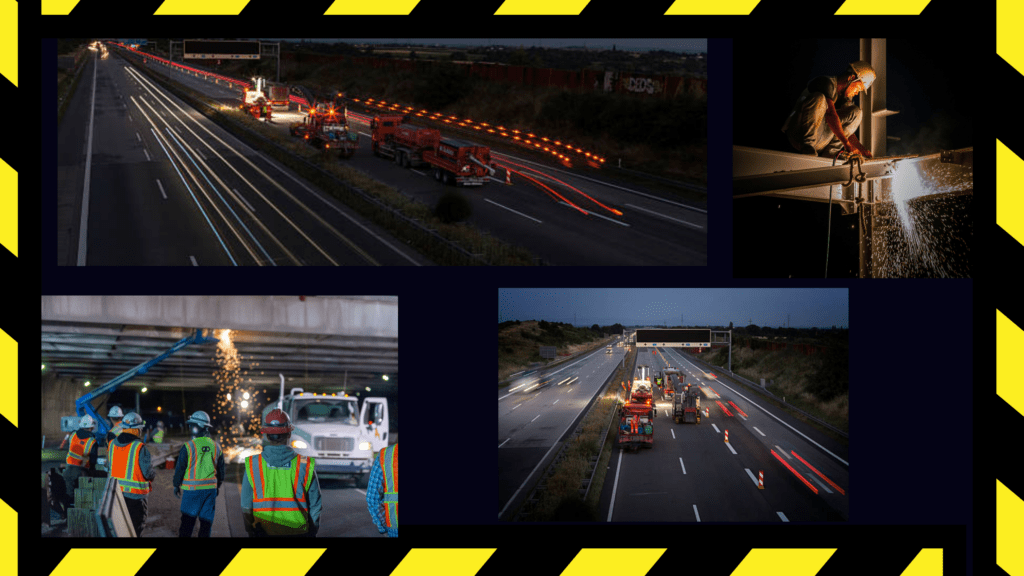
Road construction workers wearing ANSI high-visibility apparel in a nighttime work zone illuminated by traffic control lighting.

Night work zones help keep projects moving, reduce traffic congestion, and allow critical repairs and construction to continue with less disruption. However, working after dark creates challenges that significantly increase risk for both workers and motorists.

Reduced visibility, driver fatigue, improper lighting, and changing traffic patterns can all contribute to incidents in a nighttime work zone. Understanding these hazards and preparing for them is essential for contractors, utility crews, public works departments, and transportation teams.

Download Our Free Night Work Zone Safety Checklist

Preparing for a nighttime project? Download our free Night Work Zone Safety Checklist to help your crew review traffic control, lighting, PPE, fatigue management, and emergency preparedness before work begins.

Why Night Work Zone Safety Matters

Nighttime operations are inherently different from daytime work. Studies have shown that driver reaction times can be up to 50 percent slower at night because of reduced visibility, glare, and fatigue. Drivers often rely on expectations instead of details, increasing the likelihood of sudden braking, missed signs, and incorrect lane choices.

Workers can also experience fatigue during overnight operations, reducing awareness and increasing the potential for mistakes. Effective night work zone safety requires a coordinated approach that combines visibility, traffic control, lighting, and worker readiness.

Visibility Is About Recognition, Not Brightness

A common misconception is that brighter always means safer. In reality, drivers need to quickly recognize what they are seeing and understand where to travel.

Confusing traffic patterns, inconsistent device placement, and visual clutter can delay reactions and increase risk. A well-designed work zone uses clear traffic control layouts, clean reflective devices, and consistent channelization to help drivers instantly recognize the intended path through the work zone.

Lighting and Driver Behavior After Dark

Lighting is one of the most important elements of a nighttime work zone, but poor lighting can create new hazards. Improperly aimed lights can produce glare, reduce contrast, and make hazards more difficult to identify.

Driver behavior also changes after dark. Limited visibility and fatigue can lead to delayed reactions and poor decisions. Simple, easy-to-understand traffic control measures and properly directed lighting help motorists navigate work zones more safely.

High-Visibility PPE and Worker Readiness

High-visibility PPE remains one of the final layers of protection between workers and moving traffic. ANSI-compliant high-visibility apparel uses retroreflective materials that help workers stand out in vehicle headlights, but only when garments are properly maintained and workers remain visible from all directions.

Fatigue is another critical factor. Alertness naturally decreases during overnight hours, especially between 2:00 a.m. and 5:00 a.m. Monitoring workers for signs of fatigue, encouraging hydration, scheduling breaks, and rotating tasks can significantly improve worker readiness and reduce risk.

A Systems Approach to Night Work Zone Safety

There is no single product or procedure that makes a nighttime work zone safe. Effective work zone safety depends on several elements working together, including traffic control, lighting, high-visibility PPE, fatigue management, and ongoing worker training.

By focusing on visibility, consistency, and human factors, organizations can reduce confusion, improve driver recognition, and create safer conditions for everyone on the roadway.

Southern Safety Supply LLC provides ANSI-compliant high-visibility apparel, traffic control products, lighting solutions, hard hats, and jobsite safety equipment to help organizations prepare for nighttime operations. Whether you’re managing a roadway project, utility repair, public works operation, or industrial shutdown, our team can help keep your crews visible, compliant, and protected.

Contact Southern Safety Supply LLC, today to learn more about our work zone safety solutions.

Never Out™ Inventory Management

Running Low on Safety Gear?

Night work is hard enough without discovering you’re short on vests, gloves, hard hats, batteries, or traffic control products. Southern Safety Supply’s Never Out™ Inventory Management Program helps keep critical PPE and safety supplies stocked, organized, and ready when your crews need them.

Posted on

June Safety News: OSHA Heat Updates, Industry Events & Community Partnerships

Summer Safety in Tennessee

With extreme temperatures becoming more common throughout Tennessee and the Southeast, OSHA has officially revamped its 5-Year Heat Enforcement Program to help employers better protect workers from heat-related illnesses.

Heat stress remains one of the most preventable workplace hazards, yet thousands of workers are exposed to dangerous conditions every summer. Industries such as construction, public works, utilities, manufacturing, and transportation face elevated risks when temperatures and humidity rise.

Employers can help reduce heat-related incidents by implementing hydration programs, providing shaded rest areas, scheduling cooling breaks, and equipping workers with heat-stress prevention products.

Southern Safety Supply offers several solutions designed to help crews stay safe and productive during hot weather, including:

These products help workers stay cooler and more comfortable during long shifts in the summer heat while supporting workplace heat illness prevention efforts.

Learn more from OSHA: OSHA Heat Enforcement Program

Regional Emphasis Program for Heat Illness Prevention Download

Celebrating Public Works Week in Knoxville

Southern Safety Supply was proud to participate in the Public Works Week Field Day celebration honoring the dedicated professionals who help keep Knoxville running every day.

This year’s theme, “Rooted in Service, Powered by Community,” highlighted the critical role public works employees play in maintaining infrastructure, transportation systems, utilities, and public services throughout our community.

We extend our appreciation to Ben Buckner, Logistics & Supply Manager; Pamala Cotham, Supplier Outreach Manager; and Luis Garcia, Supplier Outreach Specialist, for their leadership, partnership, and ongoing support throughout the year.

We also want to recognize Connor Buis for representing Southern Safety Supply during the event and helping strengthen the relationships that support our local communities.

Public Works Week -OSHA Heat Updates Industry Events & Community Partnerships

Congratulations to Our Fenix Flashlight Giveaway Winner!

Congratulations to Randy Merritt of Brabston, Inc. for winning our Fenix RT Angle Flashlight giveaway.

Randy Merritt receiving the flashlight -OSHA Heat Updates Industry Events & Community Partnerships

We appreciate everyone who stopped by, connected with our team, and shared insights about the safety challenges and successes happening across our region. Building relationships with the professionals who keep our industries operating safely remains one of the most rewarding parts of what we do.

Knoxville Hosts Historic NAWIC Southeast Region Spring Forum

NAWIC Forum, OSHA Heat Updates Industry Events & Community Partnerships
OSHA Heat Updates Industry Events & Community Partnerships

The 2026 NAWIC Southeast Region Spring Forum made history as Knoxville hosted the event for the first time ever.

The forum brought together women from across the Southeast construction industry for leadership development, professional networking, educational sessions, and meaningful conversations about the future of construction.

Attendees participated in inspiring presentations, networking opportunities, and community-building events that showcased both the strength of the industry and the welcoming spirit of East Tennessee.

A special thank you goes to Becca Schladt and Emmy Mollish for the dedication, planning, and leadership that helped make the event such a tremendous success. Their efforts created an experience that fostered connection, encouragement, and professional growth for attendees throughout the region.

Events like the NAWIC Southeast Region Spring Forum continue to strengthen the construction industry by supporting leadership development, mentorship, and collaboration among women building the future of our communities.

Supporting Workplace Safety Across Knoxville and the Southeast

At Southern Safety Supply, our mission goes beyond providing safety products. We are committed to supporting the organizations, municipalities, contractors, and industrial facilities that help keep our communities safe, productive, and thriving.

Whether through heat-stress prevention solutions, participation in community events, industry partnerships, or educational initiatives, we remain focused on helping workers return home safely at the end of every shift.

As temperatures continue to rise this summer, now is the time to review your heat illness prevention plan, ensure workers have access to hydration and cooling solutions, and stay informed about OSHA’s latest heat safety guidance.

For safety products, PPE solutions, and workplace safety expertise throughout Knoxville, East Tennessee, and the Southeast, Southern Safety Supply is ready to help.

Posted on

May 2026 Construction Safety & Industry Update

Construction season is ramping up across East Tennessee, and contractors are preparing for busy schedules, hotter temperatures, and evolving safety demands. At Southern Safety Supply, we’re helping crews stay ready with dependable PPE, emergency deliveries, safety expertise, and practical solutions built for real jobsites. From TN811 growth to women-specific PPE and hands-on safety training at Safety Fest TN 2026, here’s what matters most this month.

East Tennessee Construction Growth Means Crews Need Reliable Safety Partners

Summer work is accelerating across Tennessee, and contractors are feeling the pressure to keep projects moving safely and efficiently. With over 317,000 dig requests processed annually through Tennessee 811, East Tennessee continues leading the state in new requests, with Knoxville ranking #1 in growth activity.

That growth creates opportunity—but also increases the need for dependable suppliers, fast turnaround times, and safety support contractors can count on.

One thing we continue hearing from utilities and contractors alike is simple: relationships matter. During a recent AGC lunch & learn, representatives discussed how organizations like Chattanooga Electric Power Board prioritize dependable supplier partnerships and responsive customer service just as much as competitive pricing.

That’s exactly where Southern Safety Supply LLC helps customers succeed. Whether crews need emergency PPE delivery, replacement safety gear, or quick answers from someone who understands the field, having the right support partner keeps projects moving.

Three Quick TN811 Reminders for Busy Crews

Dig permits aren’t just for large commercial projects—homeowners need them too.

Every contractor must have their own permit. Borrowing someone else’s permit is not allowed.

Bottom line: whether you’re breaking ground on a major commercial site or tackling a weekend residential project, TN811 is one of the easiest ways to keep crews safe and projects on track.

Safety Fest TN 2026 Put Real-World Safety Front and Center

Safety Fest TN 2026 brought safety to life with hands-on demonstrations, live field operations, and real-world training scenarios that went far beyond the classroom.

Participation from the Tennessee Valley Authority and the Tennessee Army National Guard added practical field perspective, while attendees including Consolidated Nuclear Security highlighted the strong industry engagement surrounding workplace safety this year.

Events like Safety Fest reinforce an important reality:

crews need more than products. They need fast support, knowledgeable partners, and access to safety solutions that actually work in the field.

That’s why Southern Safety Supply continues investing in services that help customers respond quickly when problems happen, including:

  • Emergency PPE delivery
  • Never Out safety supply services
  • Fast replacement options for damaged equipment
  • On-site support and product recommendations
  • Specialized PPE solutions for different workforce needs

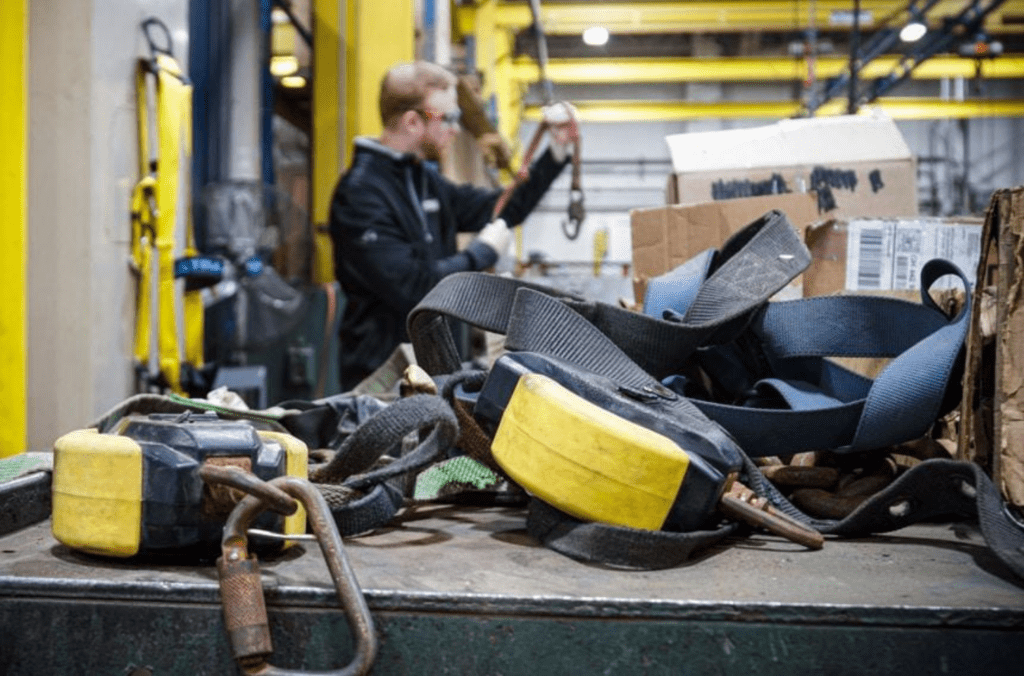
5 Signs Your Fall Arrest Harness May Need Replaced

  1. Frayed webbing or cuts
  2. Missing labels or inspection tags
  3. Rusted or damaged hardware
  4. UV fading or brittle material
  5. Equipment involved in a previous fall event

If your gear shows any of these signs, it may be time for replacement before the next jobsite inspection—or worse, an incident.

Did You Know?

Southern Safety Supply offers Never Out™ PPE delivery to help crews avoid costly downtime when safety equipment fails unexpectedly.

Women in Construction Deserve PPE That Actually Fits

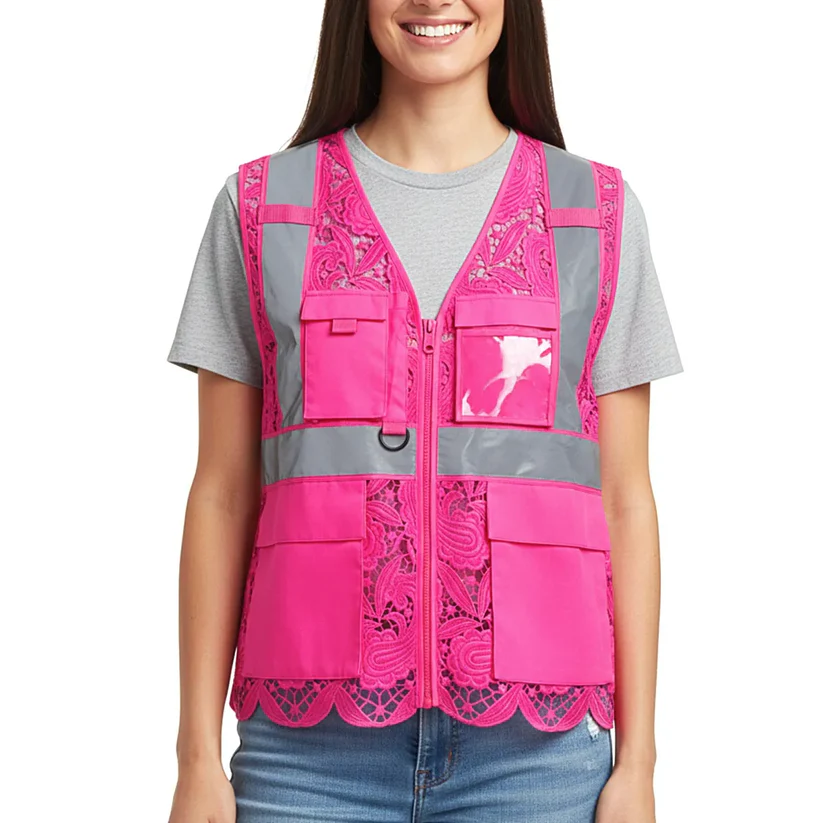
Channeling a little sparkle from Dolly Parton, we’re celebrating the women helping keep Tennessee building strong—and making sure they have PPE designed to truly fit.

Women in construction continue reshaping the industry, but properly fitted PPE is still too often overlooked. Gear built specifically for women improves comfort, mobility, and protection while helping crews stay productive throughout long shifts.

Inspired by the support and encouragement highlighted during the National Association of Women in Construction Southeast Region events, Southern Safety Supply is proud to help outfit hardworking women with safety gear designed for real-world performance.

Whether it’s gloves, high-visibility apparel, harnesses, or protective footwear, the right fit matters.

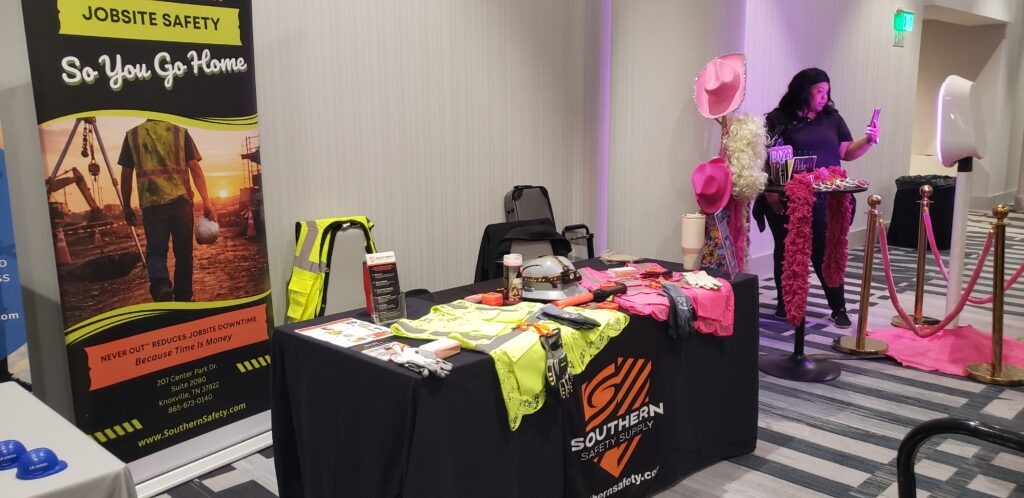
Stop by our Dolly-themed photo booth—or contact our team to learn more about PPE options designed specifically for women in construction.

Seasonal Safety Reminder

As temperatures rise heading into summer, crews should review heat stress prevention plans, hydration practices, and jobsite dress code policies. Some updated OSHA guidance allows more flexibility depending on site-specific requirements, including the use of shorts in certain environments if approved by site leadership.

Always verify site-specific PPE and dress requirements with your supervisor or safety manager before changing workwear practices.

Posted on

East Tennessee Community Updates:

East Tennessee construction safety continues to evolve as our industry grows, bringing new opportunities, stronger partnerships, and an increased focus on protecting workers. This month, we’ve been on the ground connecting with contractors, supporting workforce development, and helping crews stay compliant and jobsite-ready.

Strengthening East Tennessee Construction Safety Through Community and Compliance

April has been a strong month in for connection, growth, and reinforcing what matters most—supporting our customers and strengthening the construction community across East Tennessee.

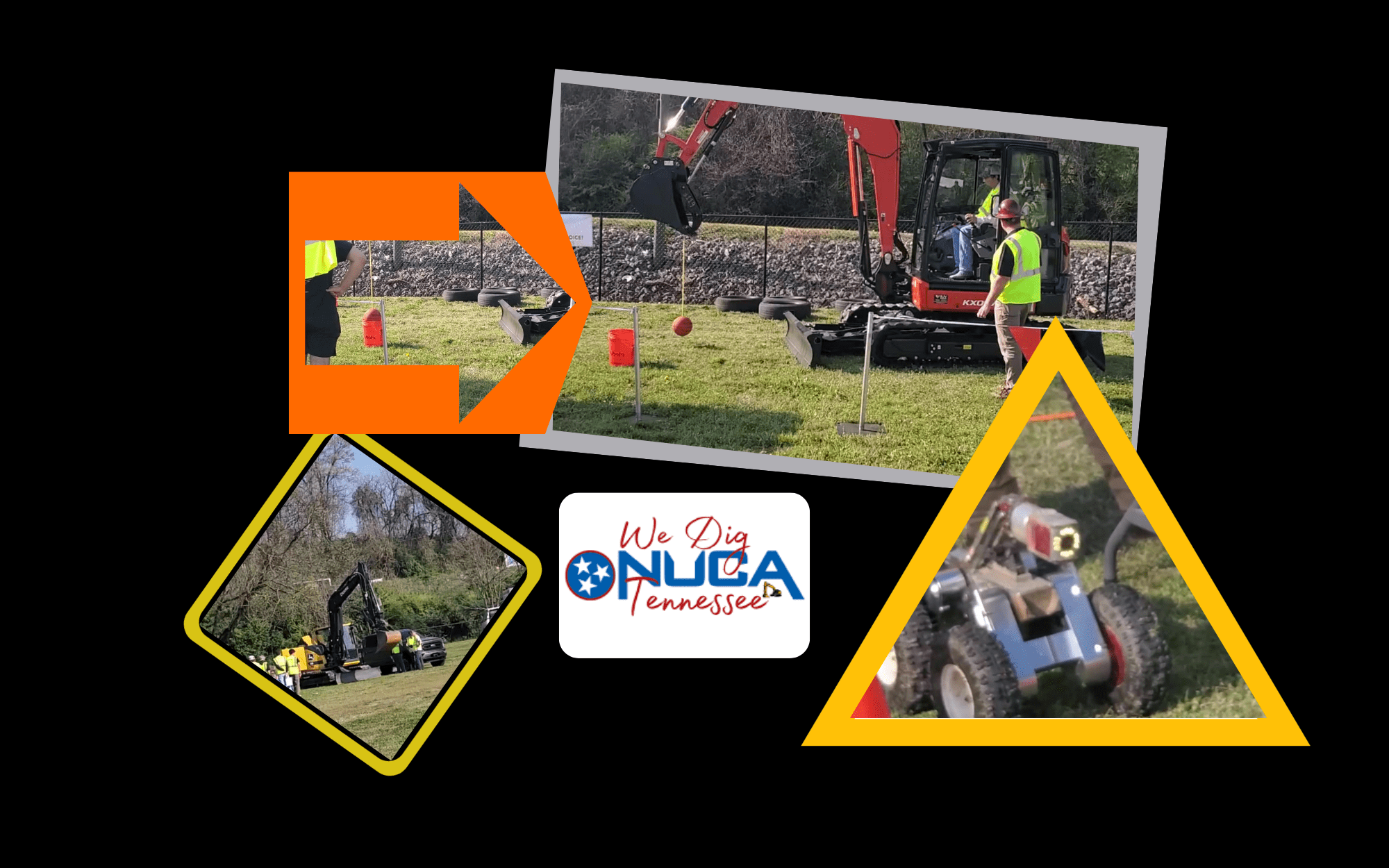
Contractors and operators participating in East Tennessee NUCA equipment rodeo competition
Skilled trades professionals competing in heavy equipment challenge East Tennessee NUCA event

We had a great time at the East TN NUCA Heavy Equipment Rodeo on March 27, connecting with industry partners, business owners, and the next generation of skilled trades.

From the action-packed equipment events to meaningful conversations at our booth, it was a fantastic day supporting the future of construction. Events like this are a strong reminder—our industry isn’t just holding steady, it’s growing.

Welcome to the Team: Connor Buis

Southern Safety Supply is proud to welcome Connor Buis to our sales team.

Connor brings more than five years of experience in roofing and dumpster sales, with a strong track record of building relationships and delivering real-world solutions.

“Connor understands what customers need and knows how to deliver,” said Sara Sizemore, President of Southern Safety Supply. “He’s reliable, approachable, and genuinely invested in helping people solve problems.”

Connor lives in Crossville with his wife, Sarah, and their son, Riley—and we’re excited to have him helping serve our customers across the region. Contact: Connor@SouthernSafety.com

Opportunities Growing at the Chattanooga Purchasing Expo

We also had a great time at the Chattanooga Purchasing Expo, connecting with local businesses and government agencies focused on expanding opportunities for small businesses.

The City’s “Help Our City Buy Local” initiative continues to build momentum, making it easier than ever for businesses to engage and grow. The message was clear—now is the time to get involved.

Supporting East Tennessee Construction Safety Through Inspections

Safety isn’t a one-time conversation—it’s an ongoing commitment.

Our certified fall arrest inspector supports customers through this essential service provided by Southern Safety Supply. From harnesses to lanyards and anchors, every piece is carefully inspected for wear, damage, and reliability.

With required annual inspections performed by a competent person, we help keep crews compliant and protected on every jobsite.

📞 Call us to schedule your inspection: 865-673-0140

Investing in the Next Generation: NAWIC Knoxville

The NAWIC Knoxville Scholarship Fundraiser at Barley’s Taproom was a huge success.

Thanks to incredible community support, the event raised $6,000 for UT’s Architecture, Construction Science, and Engineering programs—directly investing in Events that strengthen East Tennessee construction safety for the future of our industry.

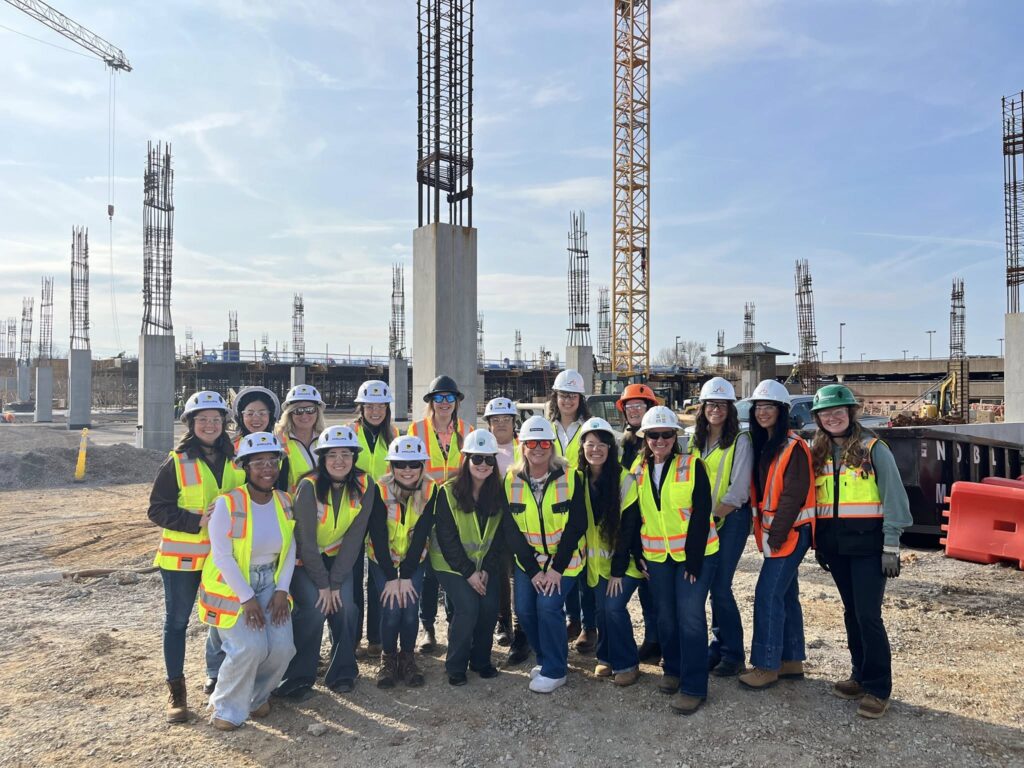
WIC Week: Real-World Impact at McGhee Tyson Airport

WIC Week wrapped up with an impressive jobsite tour at McGhee Tyson Airport, hosted by Messer Construction.

Attendees got a firsthand look at the scale of the garage project, with a strong focus on safety, coordination, and the skilled trades driving it forward.

Looking Ahead

From jobsite safety to workforce development and new business opportunities, one thing is clear—the construction industry in East Tennessee is moving forward with momentum.

We’re proud to be part of that progress and grateful for the relationships that continue to make it possible.

Posted on

New OSHA Hard Hats: Requirements Explained

Why These OSHA Hard Hat Changes Were Needed

For decades, the traditional hard hat changed very little—despite major shifts in how and where work gets done. Today’s job sites are faster, more complex, and expose workers to a wider range of impact risks than ever before. OSHA’s updated approach to head protection reflects one clear reality: most serious head injuries don’t just come from straight-down impacts.

Falls, slips, equipment swing, vehicle strikes, and lateral impacts are now among the most common causes of head trauma in construction and industrial environments. The new OSHA-aligned standards emphasize multi-directional impact protection, improved retention systems, and modern materials—all aimed at reducing preventable injuries and fatalities.

Simply put, the old hard hat design wasn’t enough anymore.


New OSHA Hard Hat Requirements: What’s Changed?

While OSHA itself references ANSI standards rather than issuing its own helmet spec, enforcement expectations in 2025 increasingly align with ANSI/ISEA Z89.1 Type II protection.

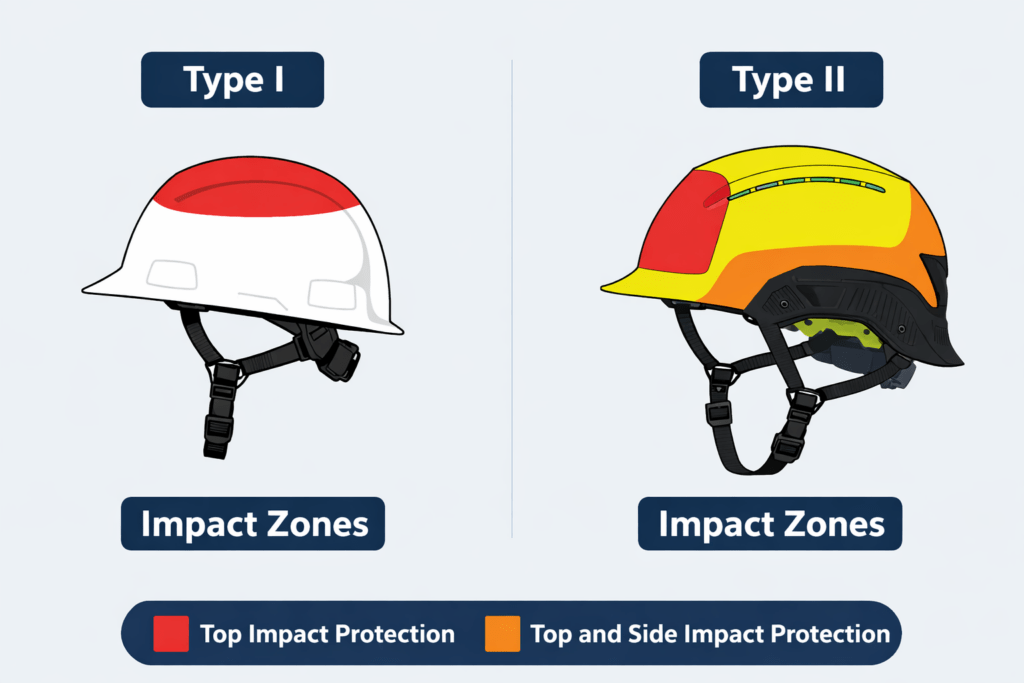
Comparison chart showing Type I vs Type II safety helmet impact protection zones including top and lateral impact coverage

Key changes safety leaders should understand:

  • Type II Protection Matters
    Unlike traditional Type I hard hats that only protect against top impacts, Type II helmets are designed to protect against front, side, and rear impacts—areas now recognized as high-risk on modern job sites.
  • Improved Retention Systems
    Chin straps and advanced retention systems are becoming essential, not optional. A helmet that comes off during a fall offers little real protection.
  • Performance-Based Design
    Manufacturers are leveraging energy-absorbing materials, advanced ventilation, and ergonomic engineering to improve safety and comfort—because PPE only works if it’s worn.

These changes signal a shift from “minimum compliance” toward real-world protection.


What Makes the New Hard Hats Different?

With integrated technology Koroyd Absorb The Impact.

The new hard hat isn’t just a modern version of the same thing—it’s a whole new system. OSHA and ANSI took cues from industries that already lead in head protection—such as rock climbing, cycling, and search & rescue—and applied those principles to industrial job sites. The result is a helmet that:

  • Absorbs energy more effectively
  • Stays securely in place during movement or impact
  • Improves comfort so workers actually keep it on

This evolution represents a fundamental change in how head protection is designed and evaluated.


Better Materials, Smarter Engineering

Modern safety helmets use advanced materials and engineering that outperform traditional suspension-only designs.

Key innovations include:

Lighter, vented shells that reduce heat stress

Cellular energy-absorbing cores that crush on impact

Multi-point retention systems that prevent roll-off

These improvements dramatically reduce the force transferred to the head during an impact—helping lower the risk of serious or fatal injury.


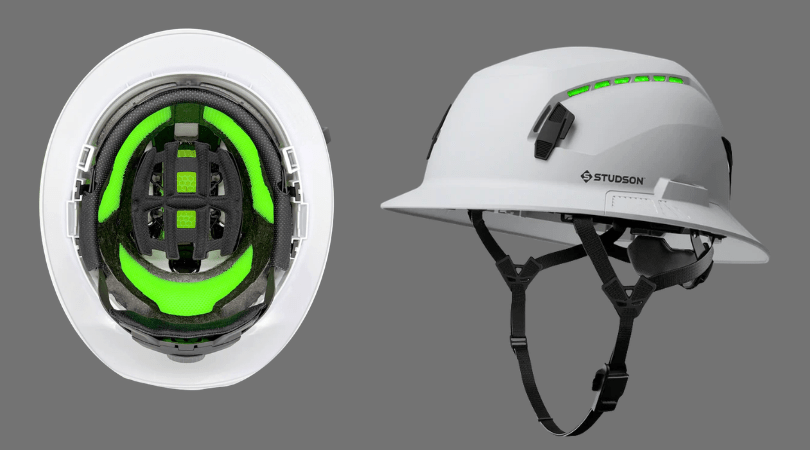
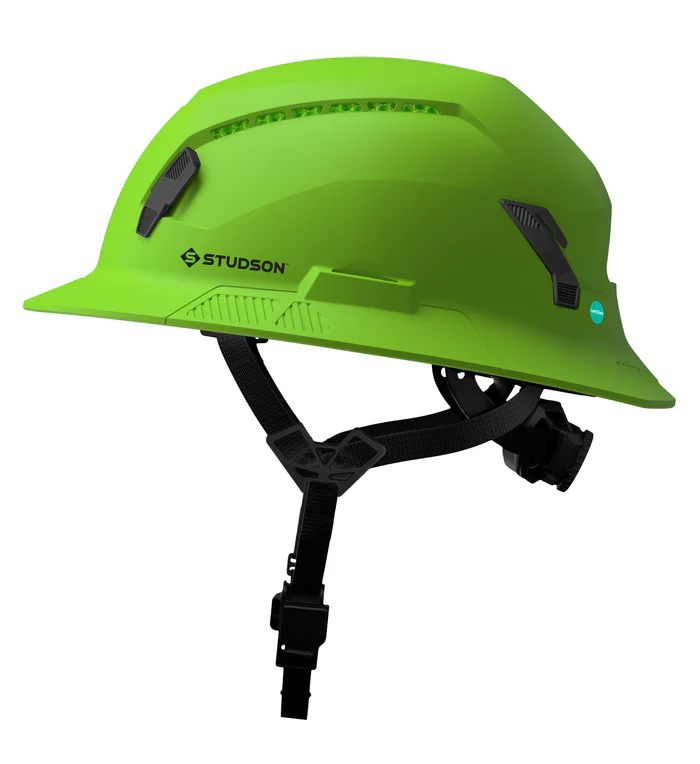
Featured Solution: STUDSON SHK-1 Full Brim Vented Safety Helmet

For industrial professionals and safety leaders who prioritize worker safety and comfort, the STUDSON SHK-1 Full Brim Vented Safety Helmet delivers next-generation protection without compromise.

This helmet is ANSI Type II compliant, engineered to safeguard against impacts from the top, front, side, and rear, providing comprehensive protection you can trust.

Key Features

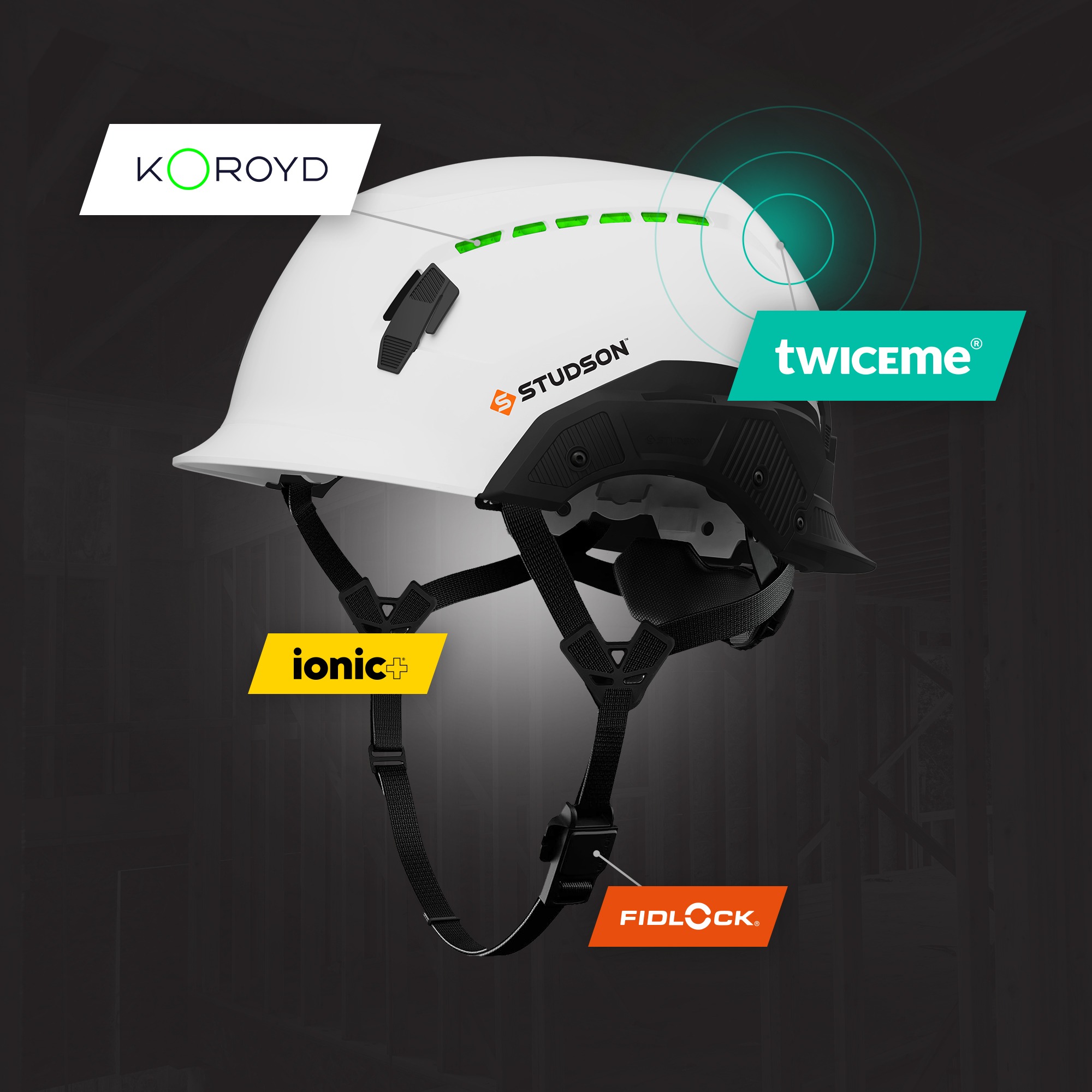
  • Advanced Impact Protection The SHK-1 features integrated Koroyd® technology, which goes beyond traditional helmet materials. Koroyd®’s cellular structure instantly crumples on impact, absorbing and dissipating energy far more effectively. This significantly reduces the force transmitted to the wearer’s head—helping minimize the risk of serious head injury.
  • Instant Access to Critical Information Every second counts during an emergency. The SHK-1 includes embedded Twiceme® NFC technology, allowing first responders to instantly access pre-loaded emergency contacts and medical information using any NFC-enabled device. Faster access means faster, more effective care.
  • Glove-Friendly, Secure Fit The Fidlock® magnetic chinstrap with a 4-point retention system provides a secure fit that’s easy to fasten—even while wearing thick work gloves. No more fumbling with buckles; just quick, reliable security every time.

Compliance & Standards

The STUDSON SHK-1 meets or exceeds the following standards:

ANSI/ISEA Z89.1-2014 (R2019) – Type I & Type II (United States) EN 12492:2012 Clauses:

  • Shock Energy Absorption (Front, Side, Rear)
  • Penetration Resistance
  • Retention System Strength
  • Roll-Off Effectiveness

Note: This helmet meets ANSI Type II standards but is not certified to CSA Z94.1 Type II (Canada).

Backed by a 3-year manufacturer’s warranty, the SHK-1 offers a typical field use life of 3–5 years and a shelf life of up to 10 years when stored properly.


All-Day Comfort for Enhanced Productivity

Comfort isn’t a luxury—it’s a productivity factor.

The SHK-1 weighs just 525 g and features a strategically vented design to maximize airflow and reduce heat buildup during long, physically demanding shifts. The Perfect Fit System with adjustable front and rear dials accommodates head sizes from 53–63 cm, ensuring a secure, personalized fit for all-day wear.

When workers are comfortable, compliance goes up—and so does safety.


Built for Your Industry

The STUDSON SHK-1 Full Brim Class C Safety Helmet is ideal for:

Other physically demanding trades

Construction

Masonry

Utility and infrastructure work

It is designed for environments where electrical hazards are not a primary concern.

Important Note: This is a Class C (Conductive) helmet and does not provide electrical insulation. Always conduct a job hazard analysis to determine the correct helmet class for your work environment. We carry non-vented versions as well.


The Bottom Line

The 2025 shift toward OSHA-aligned Type II safety helmets isn’t about trends—it’s about reducing real injuries on real job sites.

Upgrading to modern head protection like the STUDSON SHK-1 helps safety leaders:

  • Improve impact protection
  • Increase PPE compliance
  • Support worker comfort and productivity

The future of job site safety is already here—and it starts at the top.

FAQ

What is the difference between Type I and Type II safety helmets?
Type I helmets protect from impacts to the top of the head, while Type II helmets provide both top and lateral impact protection.

Does OSHA require Type II helmets in 2025?
OSHA’s updated 2025 head protection guidance encourages and in some cases requires helmets that protect against both top and side impacts.

Are traditional hard hats still allowed?
In some situations, yes. However, many contractors are moving to Type II helmets to reduce traumatic brain injuries.

Posted on

Community Updates

Southern Safety Supply LLC | Knoxville TN

WIC Leadership Training

We’re proud to support WIC Leadership Training, helping develop strong leaders who are shaping the future of construction. Investing in people is always a win for the industry.   Image   Over 65 women in the construction industry met together to show our support for each other.  It was a great event to take time out of our routines and learn just how much alike each one of us are in the work place, our homes and individually.      


WIC Imposter Syndrome   

The WIC Imposter Syndrome Seminar sparked an important conversation about confidence, growth, and belonging in construction. A powerful reminder that you’ve earned your seat at the table—now own it. Image      

KUB Procurement Outreach  

Great connecting with the team at KUB Procurement Outreach and learning more about upcoming opportunities. We’re excited to continue building relationships that support contractors, crews, and safer jobsites. Image      

AGC Build Knoxville Awards   

Always a great time with AGC Build Knoxville—an organization that continues to elevate our local construction community. We’re proud to be involved and support the work they do. Congratulations to all the award winners being recognized for outstanding work and leadership. It’s inspiring to celebrate the projects and people raising the bar in construction. ImageDISCOVER MORE ABOUT SOUTHERN SAFETY SUPPLY LLC  

Posted on

Never Out™ Management

Never Out™ management

Never Out™: Your Turnkey Safety Inventory Management

Nothing stops productivity like missing safety gear.
At Southern Safety Supply, our Never Out™ management ensures your jobsite is always stocked with mission-critical safety products — from everyday PPE to specialized equipment — so your crew stays compliant, protected, and ready to work.

Whether it’s an $8 pair of gloves or a life-saving fall protection harness, Never Out means no more interruptions, no more emergency re-orders, and no more downtime.

How Never Out™ Works

  • 1. We Audit
  • A dedicated safety representative conducts monthly site visits to check inventory levels and expiration dates.
  • 2. We Stock
  • Based on your actual usage, we replenish only what you need — no overstock, no dead inventory.
  • 3. We Report
  • You receive a single invoice + a usage report to simplify ordering and budgeting.

Key Never Out™ Inventory Categories

Go here for high-value items that we track and maintain so you never run short.

PPE — Personal Protective Equipment

These essentials protect workers daily and are the backbone of any safety program.

Examples We Keep Stocked:

Fall Protection & Specialty Equipment

Failure to protect workers at height can have devastating consequences. Keeping this equipment never out is crucial.

Compliance & First Aid Solutions

From emergency preparedness to regulatory compliance, these items ensure your site meets OSHA and internal safety standards.

Consumables & Everyday Supplies

These items may be inexpensive, but running out can instantly halt work.

Why Never Out™ Works

• Immediate, same-day solutions when inventory drops below your “safe level.”
• Always stocked — NEVER OUT.
• Predictable, scheduled visits that fit your operations.
• On-site approval for replenishment and invoicing.

These structured inventory visits reduce risk, save time, and prevent safety-related work stoppages — even over seemingly small items.

Ready to eliminate inventory outages and work stoppages?

👉 Schedule your FREE on-site 15-minute walk through with our safety expert today.
👉 Together, we’ll build your custom Never Out inventory list — tailored to your crew, hazards, and compliance requirements.
Visit our Shop to explore products. Contact us at James@southernsafety.com or call (865) 673-0140.

<div class="pipedriveWebForms" data-pd-webforms="https://webforms.pipedrive.com/f/6b4X8NNztm65aHjsQuaiURv0fikhId3Rkb1olnnXMteYZPRFrL1eOarzVDPjjxtV6j"><script src="https://webforms.pipedrive.com/f/loader"></script></div>