
A Complete Guide to Workplace Emergency Preparedness
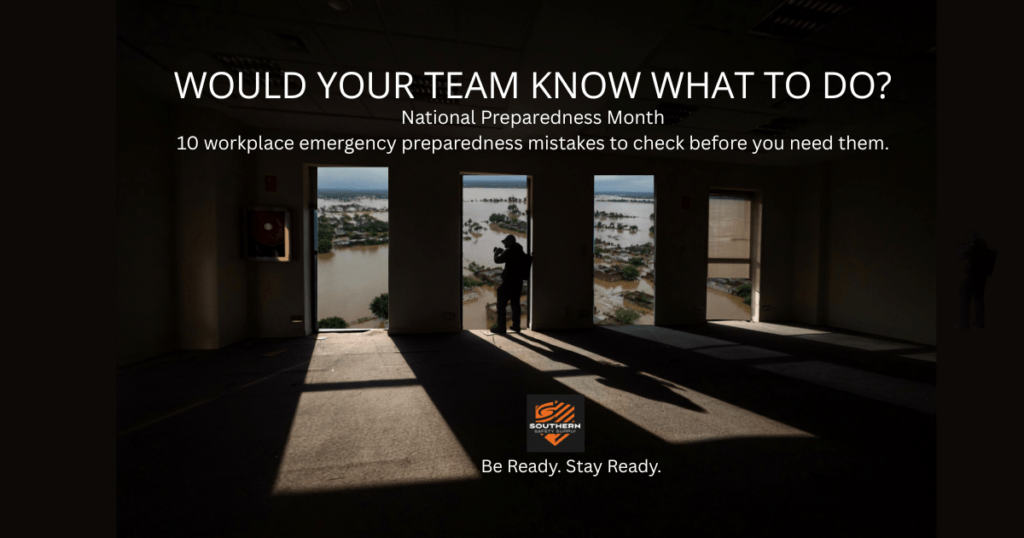
September is National Preparedness Month—a good reminder that being prepared isn’t just about having a plan on paper. It’s about knowing what could go wrong, knowing what to do when it does, and having the people, equipment, and communication systems ready to respond.
For businesses, contractors, manufacturers, municipalities, and other organizations, an emergency can take many forms. A tornado, flood, fire, chemical spill, equipment failure, power outage, workplace injury, utility strike, structural problem, or other unexpected event can quickly turn a normal workday into an emergency.
The question isn’t whether you can predict every emergency.
You can’t.
The better question is:
If something went wrong at your workplace or jobsite today, would your team know what to do?
This guide covers the fundamentals of workplace emergency preparedness, including OSHA requirements, emergency action plans, jobsite risks, emergency equipment, drills, spill response, and the special challenges of preparing for emergencies on changing construction sites.
What Is Workplace Emergency Preparedness?
Workplace emergency preparedness is the process of identifying potential hazards, developing procedures for responding to emergencies, training employees, and making sure necessary equipment and resources are available before an emergency occurs.
OSHA defines workplace emergencies broadly. They can include natural disasters, fires, chemical releases, explosions, floods, severe weather, and other events that threaten workers, customers, the public, property, or the environment.
A good emergency preparedness program should answer several basic questions:
- What emergencies could happen here?
- How will employees know an emergency is occurring?
- Should employees evacuate or shelter in place?
- Where should employees go?
- Who is responsible for leading the response?
- How will everyone be accounted for?
- Who contacts emergency responders?
- Who is authorized to perform emergency shutdown procedures?
- What equipment or PPE may be needed?
- What happens after the emergency?
- How often will the plan be reviewed and practiced?
The goal isn’t to create a plan that sits in a binder.
The goal is to create a plan people can actually use under pressure.
Does OSHA Require an Emergency Action Plan?
Sometimes.
This is an important distinction.
OSHA recommends emergency action planning as a good way to protect workers and businesses, but not every employer is automatically required to have a written EAP under the same OSHA standard.
Two important OSHA standards address written Emergency Action Plans:
- 29 CFR 1910.38 for general industry
- 29 CFR 1926.35 for construction
For employers covered by those requirements, the emergency action plan must address specific elements such as emergency reporting procedures, escape routes, accountability after evacuation, designated rescue or medical duties, and procedures for employees who may remain to perform critical operations.
The requirements can vary depending on the industry, worksite, hazards, and other applicable OSHA standards.
Bottom line: Don’t assume that having a generic emergency plan downloaded from the internet automatically makes your workplace compliant. Your plan should be based on the actual hazards, layout, operations, and people at your worksite.
Related resource:
What Does OSHA Require for a Workplace Emergency Action Plan? Link
Start With a Hazard Assessment
You can’t prepare for an emergency you haven’t considered.
OSHA recommends conducting a hazard assessment to identify physical and chemical hazards inside or outside the workplace that could create an emergency. The emergency plan should take into account the site’s layout, structural features, emergency systems, and specific hazards.
Start by asking:
What could happen here?
Consider at least five categories of risk.
1. Environmental & Natural Hazards
Depending on your location and operations, these may include:
- Tornadoes
- Severe thunderstorms
- Flooding
- Hurricanes
- Extreme heat
- Winter weather
- Wildfires
- Earthquakes
- Power outages
September is an especially useful time to review these risks because National Preparedness Month encourages businesses and communities to prepare for emergencies before they happen.
2. Operational Hazards
Consider emergencies caused by the work itself:
- Machinery failures
- Vehicle or forklift incidents
- Crane or heavy-equipment incidents
- Electrical failures
- Utility strikes
- Equipment fires
- Worker entrapment
- Traffic or work-zone incidents
- Fuel leaks
- Production interruptions
3. Chemical & Hazardous-Material Hazards
Depending on your operations, consider:
- Chemical spills
- Fuel releases
- Gas leaks
- Battery incidents
- Toxic or corrosive materials
- Flammable materials
- Hazardous waste
- Unknown substances
Not every spill is something an employee should simply clean up with a spill kit. Some hazardous-substance emergencies can trigger additional OSHA requirements, including HAZWOPER requirements for covered emergency response operations.
4. Structural Hazards
Especially important for construction and industrial operations:
- Structural damage
- Partial collapse
- Falling objects
- Damaged scaffolding
- Excavation or trench incidents
- Damaged temporary structures
- Building damage following severe weather
5. Fire & Life-Safety Emergencies
Don’t overlook:
- Building fires
- Equipment fires
- Electrical fires
- Explosions
- Smoke emergencies
- Gas releases
- Other events requiring immediate evacuation or shelter
Construction Sites Have a Special Preparedness Problem
A permanent facility may have the same exits, assembly areas, equipment locations, and emergency systems for years.
A construction site can change tomorrow.
That creates a unique emergency-preparedness challenge.
A jobsite may have:
- New excavation
- New access points
- Changing traffic patterns
- Different subcontractors
- Temporary power
- Changing equipment locations
- New material storage areas
- Temporary structures
- Different crews working different shifts
- Changing evacuation routes
OSHA specifically notes that construction sites and other non-fixed facilities present unique evacuation challenges because conditions can change.
If your site changes, your emergency plan should be reviewed as conditions change.
A plan that was accurate when the project started may not accurately describe the site three months later.
Related resource:
Emergency Preparedness for Construction Sites: What Contractors Need to Know
Evacuation or Shelter-in-Place?
Not every emergency calls for the same response.
A fire may require evacuation.
A tornado may require shelter.
A hazardous-material release outside your facility may make shelter-in-place the safer option.
OSHA recommends planning for both evacuation and shelter-in-place situations and determining ahead of time what conditions would trigger each response.
Your plan should identify:
- When evacuation is required
- When shelter-in-place may be appropriate
- Who has authority to order evacuation or shutdown
- Evacuation routes
- Alternate routes
- Assembly areas
- Accountability procedures
- Procedures for visitors and contractors
- Procedures for workers who may need assistance
- Communication methods
Don’t assume employees will automatically know which response is appropriate.
Tell them before the emergency happens.
Emergency Equipment: What Should You Have Ready?
There is no single emergency equipment list that works for every business.
A construction site, manufacturing facility, warehouse, utility contractor, and municipal operation may have very different hazards.
Your equipment should be based on your hazard assessment.
Depending on your operation, emergency supplies may include:
First Aid
- First aid kits
- Trauma supplies where appropriate
- AEDs
- Burn treatment supplies
Spill Response
- Universal spill kits
- Oil-only spill kits
- Chemical/hazmat spill kits
- Absorbent pads
- Absorbent socks and pillows
- Disposal bags
- Appropriate PPE
Eye & Face Protection
- Emergency eyewash
- Safety glasses
- Goggles
- Face shields
Visibility & Site Control
- High-visibility apparel
- Barricade tape
- Warning signs
- Cones
- Emergency lighting
Emergency Lighting & Communication
- Flashlights
- Headlamps
- Batteries
- Radios
- Other emergency communication equipment
PPE
Depending on the hazard:
- Gloves
- Protective clothing
- Eye and face protection
- Hearing protection
- Respiratory protection
- Chemical-resistant PPE
- Flame-resistant or arc-rated clothing where applicable
PPE should be selected based on the hazards present and used as part of a broader safety program—not as a substitute for eliminating or controlling hazards. OSHA emphasizes hazard assessment and the hierarchy of controls before relying on PPE.
Need help identifying emergency supplies?
Southern Safety Supply can help businesses evaluate the PPE and emergency-response products appropriate for their operations.
Shop Emergency & Spill Response Supplies
Don’t Forget the Spill Kit
Here’s a simple question every facility and jobsite should be able to answer:
If something spills right now, where is the spill kit?
And a second question is even more important:
Does the person who discovers the spill know what they’re supposed to do?
A spill response plan should consider:
- What material was released?
- Is anyone injured or exposed?
- Is the area safe to enter?
- Should the area be evacuated?
- Who should be notified?
- Is the employee trained and authorized to respond?
- What PPE is required?
- What type of containment equipment is appropriate?
- How will the material be collected and disposed of?
- When should outside emergency responders be contacted?
Never assume that every spill is a routine cleanup.
The hazards of the material, size and circumstances of the release, employee training, and applicable regulations all matter.
Related resource:
Spill Happens: What Should You Do When There’s a Workplace Spill?
Southern Safety Solution
Different spills require different approaches.
Does Your Team Know What to Do?
A written plan isn’t enough if employees don’t understand it.
OSHA recommends training workers on the emergency action plan, including potential emergencies, reporting procedures, alarm systems, evacuation procedures, shutdown procedures, individual responsibilities, and emergency equipment.
Employees should know:
- What different alarms mean
- How to report an emergency
- Where to evacuate
- Where to shelter
- Where assembly areas are located
- How accountability will work
- Who is in charge
- Who can perform emergency shutdowns
- Where emergency equipment is located
- What they are—and are not—authorized to do
And then there’s the part many workplaces skip:
Practice.
OSHA recommends practice drills as often as necessary to keep workers prepared and encourages employers to evaluate the effectiveness of drills afterward.
A drill doesn’t have to be complicated.
Try a simple scenario:
“At 10:15 Tuesday morning, a forklift strikes a container and a spill occurs.”
Then ask:
Who discovers it?
Who sounds the alarm?
Who calls for help?
Who stops nearby work?
Who evacuates?
Where does everyone go?
Who accounts for employees?
Who meets emergency responders?
Who is authorized to address the spill?
What happens after the immediate emergency?
If nobody knows the answers, you’ve just identified an opportunity to improve the plan—without having to learn the hard way during a real emergency.
Related resource:
Emergency Drills: Does Your Team Actually Know What to Do?
What Happens After the Emergency?
Preparedness doesn’t end when the immediate danger is over.
After an emergency or drill, employers should evaluate what worked, what didn’t, and what needs to change.
Consider:
- Were all employees accounted for?
- Did everyone understand the alarm?
- Were evacuation routes accessible?
- Did communication work?
- Did emergency responders have the information they needed?
- Was emergency equipment easy to locate?
- Was the correct PPE available?
- Were employees clear about their responsibilities?
- Were there delays or points of confusion?
- What supplies were used?
- What needs to be replaced?
- Does the emergency action plan need to be updated?
OSHA recommends evaluating drills, identifying strengths and weaknesses, and determining ways to improve the plan.
A good emergency plan gets better every time you test it.
10 Common Emergency Preparedness Mistakes
Even organizations with emergency plans can have gaps.
Watch for these common problems:
1. The plan exists—but nobody knows where it is.
A plan isn’t useful if employees can’t access or understand it.
2. The plan hasn’t been updated.
Changes to buildings, equipment, processes, personnel, or construction sites can change emergency risks.
3. Employees don’t know who is in charge.
A clear chain of command helps reduce confusion.
4. Evacuation routes aren’t obvious.
Routes should be identified, accessible, and kept clear.
5. Nobody has decided how employees will be accounted for.
“Everyone meet outside” isn’t an accountability procedure.
6. Emergency equipment is hard to find.
A spill kit hidden behind three pallets isn’t much help during a spill.
7. Employees aren’t sure what they’re authorized to do.
Not every employee is trained or authorized to shut down equipment, administer certain first aid, or respond to hazardous-material releases.
8. Contractors and visitors are overlooked.
Your emergency plan needs to consider everyone who may be at the worksite.
9. The plan has never been practiced.
You don’t want the first drill to be a real emergency.
10. Nobody reviews what happened afterward.
Every drill is an opportunity to make the next response better.
Related resource:
10 Emergency Preparedness Mistakes Employers Make
Your Workplace Emergency Preparedness Checklist
Use these questions as a starting point for reviewing your preparedness program:
Emergency Planning
☐ Have we identified the emergencies most likely to affect our operation?
☐ Do we have a site-specific emergency action plan where required?
☐ Does the plan reflect our current workplace or jobsite?
☐ Do employees know where to find the plan?
Communication
☐ Do employees know how to report an emergency?
☐ Are emergency contacts current?
☐ Can alarms be recognized by everyone who needs to respond?
☐ Do we have backup communication methods?
Evacuation & Shelter
☐ Are evacuation routes clearly identified?
☐ Are alternate routes available?
☐ Is there a designated assembly area?
☐ Do we have a method for accounting for workers?
☐ Have we considered visitors, contractors, and workers who may need assistance?
☐ Have we identified situations requiring shelter-in-place?
Emergency Equipment
☐ Are first aid supplies available?
☐ Are spill-response supplies appropriate for our hazards?
☐ Is emergency eyewash available where required?
☐ Are emergency lights/flashlights available?
☐ Is appropriate PPE available?
☐ Can employees quickly locate emergency equipment?
Training & Drills
☐ Have employees been trained on the emergency plan?
☐ Do employees understand their responsibilities?
☐ Have we practiced evacuation or other emergency scenarios?
☐ Have we reviewed the results of our last drill?
☐ Have we corrected problems identified during the drill?
Inventory
☐ Are critical emergency supplies currently in stock?
☐ Do we know what supplies were used during the last emergency or drill?
☐ Have expired or damaged supplies been replaced?
☐ Do we have a process for keeping critical PPE and emergency supplies available?
Preparedness Isn’t Just Having the Right Equipment
A spill kit doesn’t create a spill-response program.
A first aid kit doesn’t create a medical-response plan.
A hard hat doesn’t replace hazard controls.
And an emergency action plan doesn’t help much if nobody knows what it says.
Preparedness is the combination of planning, training, communication, equipment, and practice.
The goal is simple:
When something goes wrong, your people should know what to do—and have the resources to do it safely.
Southern Safety Supply: Helping Keep You Prepared
For more than 30 years, Southern Safety Supply has helped businesses, contractors, manufacturers, municipalities, and other organizations find the safety equipment and support they need to keep their people protected and their operations moving.
From everyday PPE to emergency supplies, spill response equipment, first aid, visibility products, and jobsite safety equipment, we’re here to help you find the right solution for the hazards you’re facing.
And when keeping critical PPE in stock becomes another thing on your already-long list, our Never Out™ Inventory Management Program is designed to help.
We monitor usage, help identify what you’re running low on, and work with you to keep essential safety supplies available before an empty shelf becomes a problem.
Because being prepared isn’t just having the right PPE.
It’s having it when you need it.
Emergency Preparedness Resources
For additional guidance, consult authoritative sources including:
- OSHA — Emergency Preparedness and Response
- OSHA — Emergency Action Plans
- OSHA — Evacuation & Shelter-in-Place
- OSHA — Hazardous Waste Operations and Emergency Response (HAZWOPER)
- EPA — Emergency Preparedness
- FEMA / Ready Campaign — National Preparedness Month
Important Note
This article is provided for general educational purposes and is not legal or safety consulting advice. Emergency drills should be planned for the specific hazards and conditions of your workplace. Do not conduct exercises that create unnecessary risk or interfere with actual emergency response. Follow applicable OSHA requirements and coordinate with appropriate safety personnel and emergency responders when necessary.
Keep Building Your Emergency Preparedness Plan
This article is part of our National Preparedness Month work place safety series.
Continue exploring the series:
- National Preparedness Month: Your central resource for workplace emergency preparedness.
- 10 Workplace Emergency Preparedness Mistakes That Could Leave Your Team Unprepared.
- What Does OSHA Require for an Emergency Action Plan?
- Workplace Emergency Kits: What Should You Actually Have on Hand?
- First Aid and Emergency Supplies: What Does Your Workplace Really Need?
- Emergency Preparedness for Construction Sites: What Changes When the Jobsite Changes?
- Evacuation vs. Shelter-in-Place: Does Your Workplace Know the Difference?
- Emergency Drills: How to Test Your Plan Before You Need It.
- Severe Weather Emergency Preparedness: Is Your Workplace Ready?
- Spill Happens: Workplace Spill Response and Preparedness.